
Description
GIBSON ES-345TD Bigsby Cherry de 1960
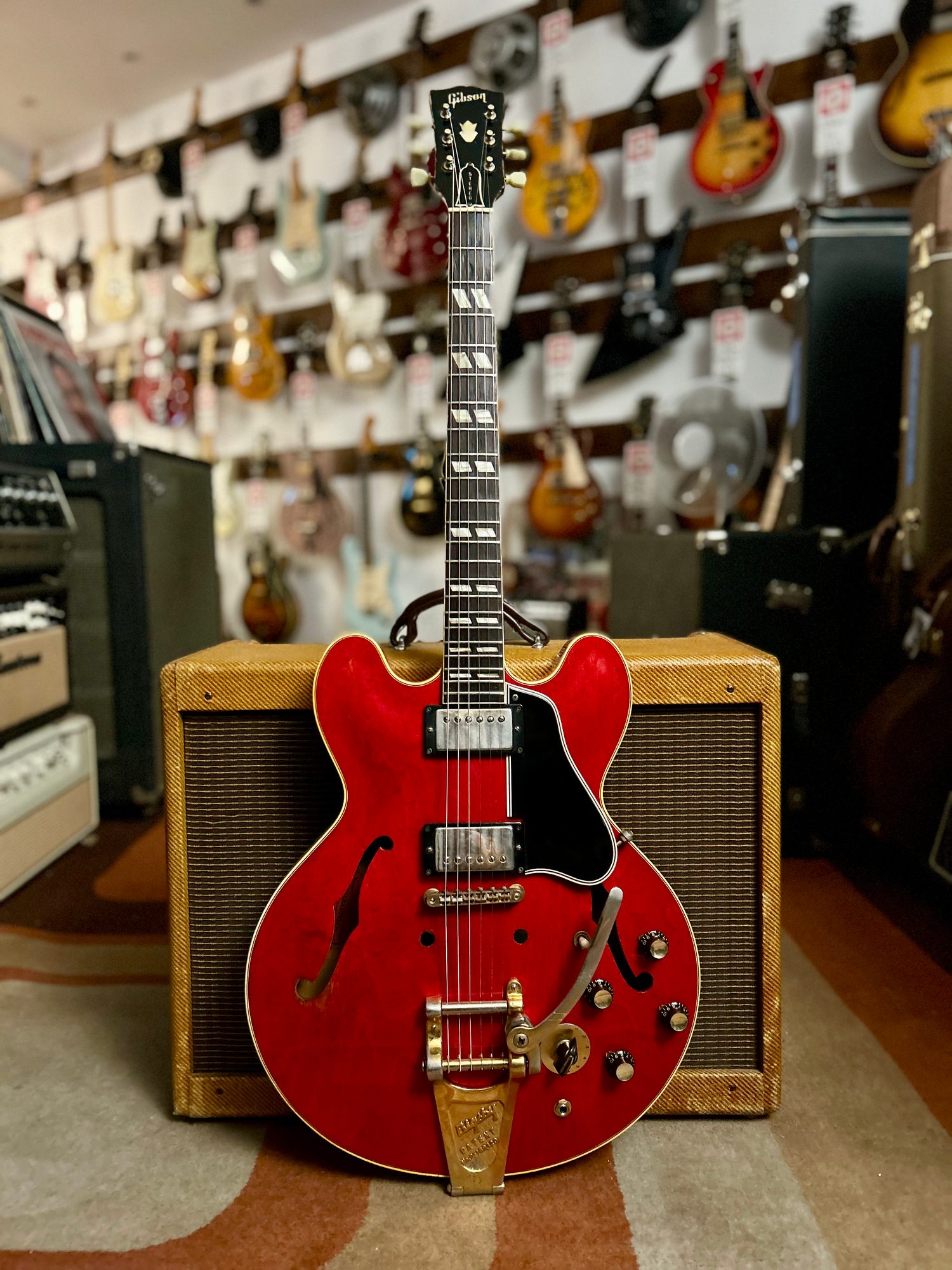
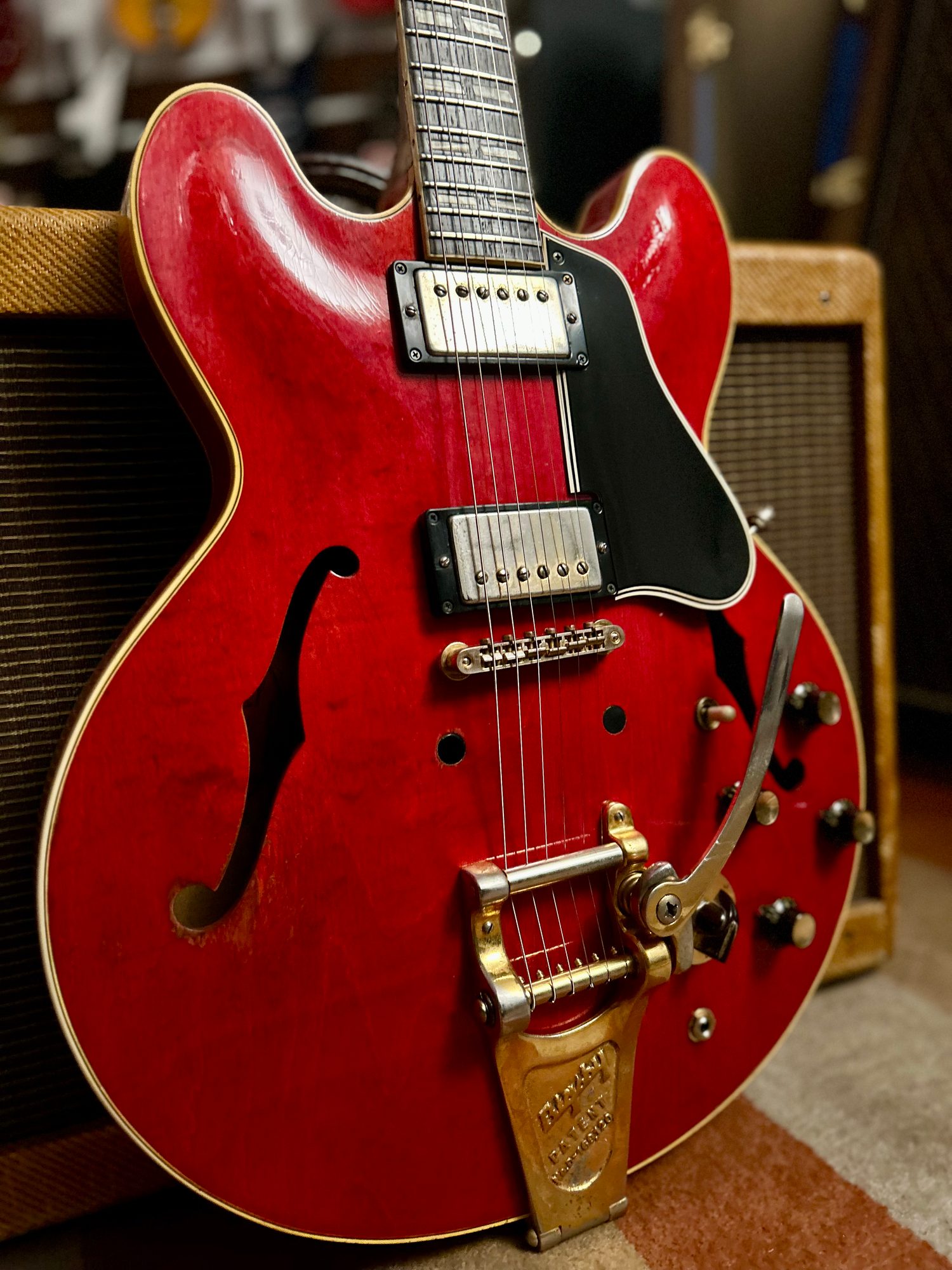
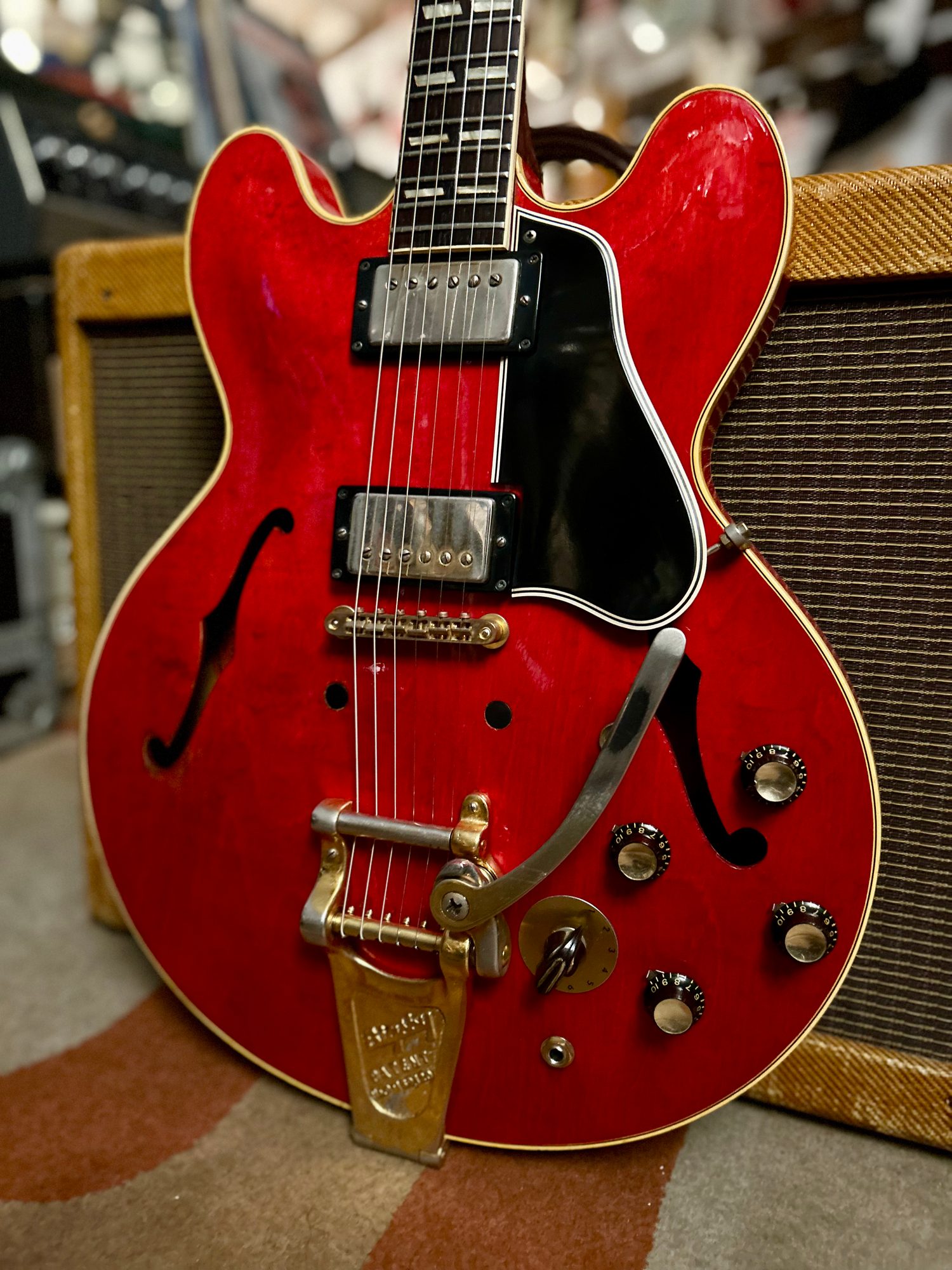
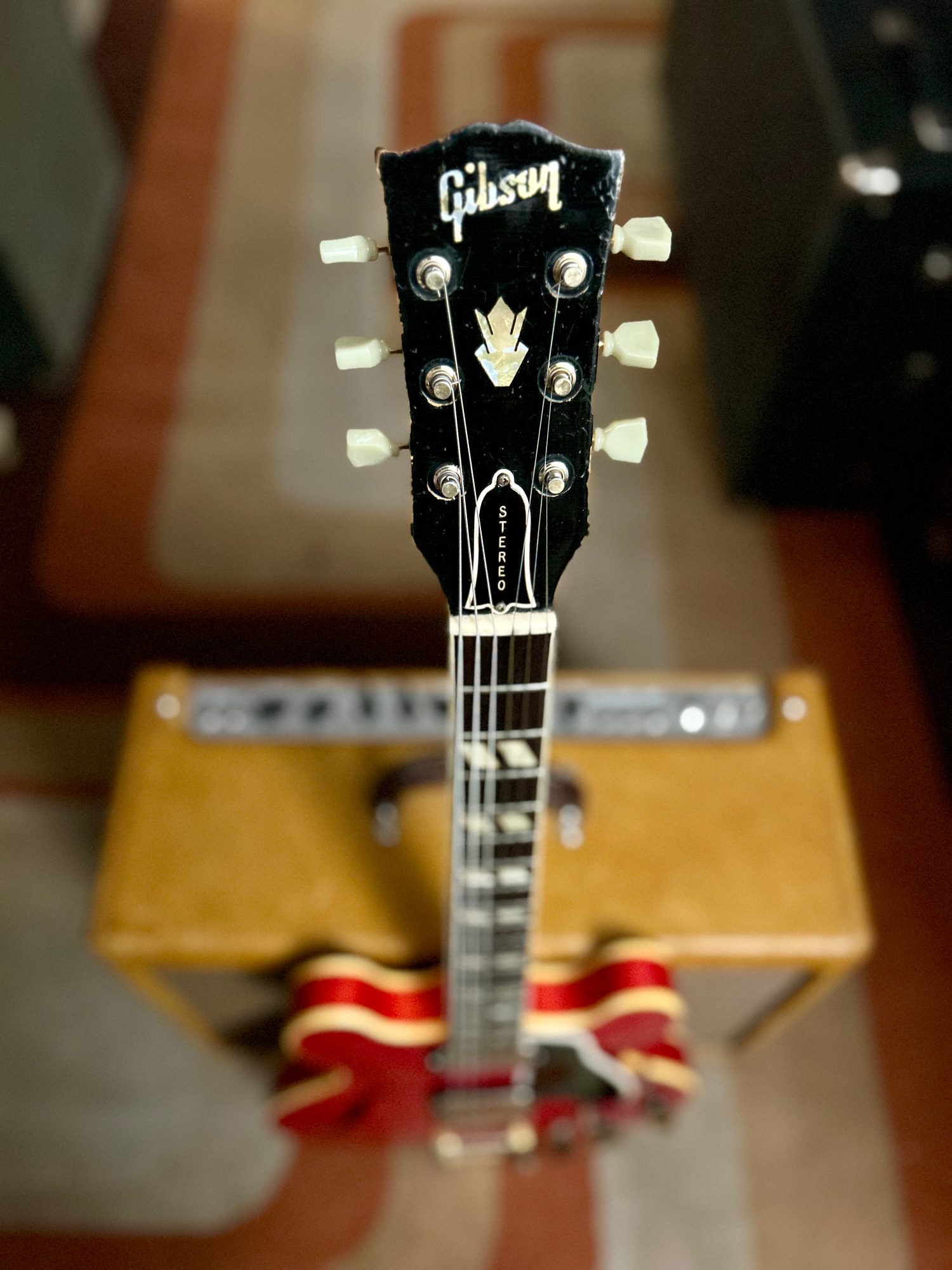
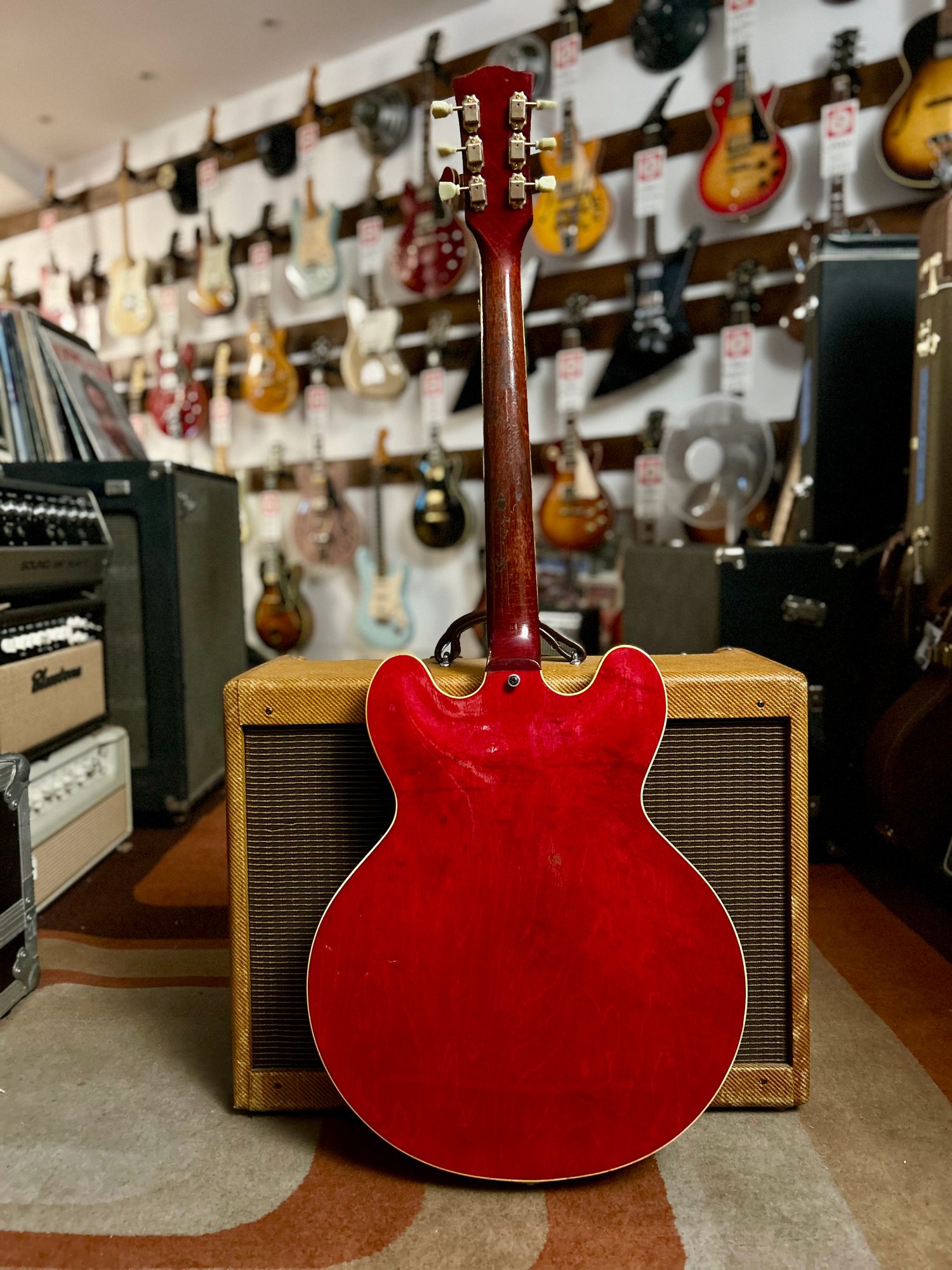
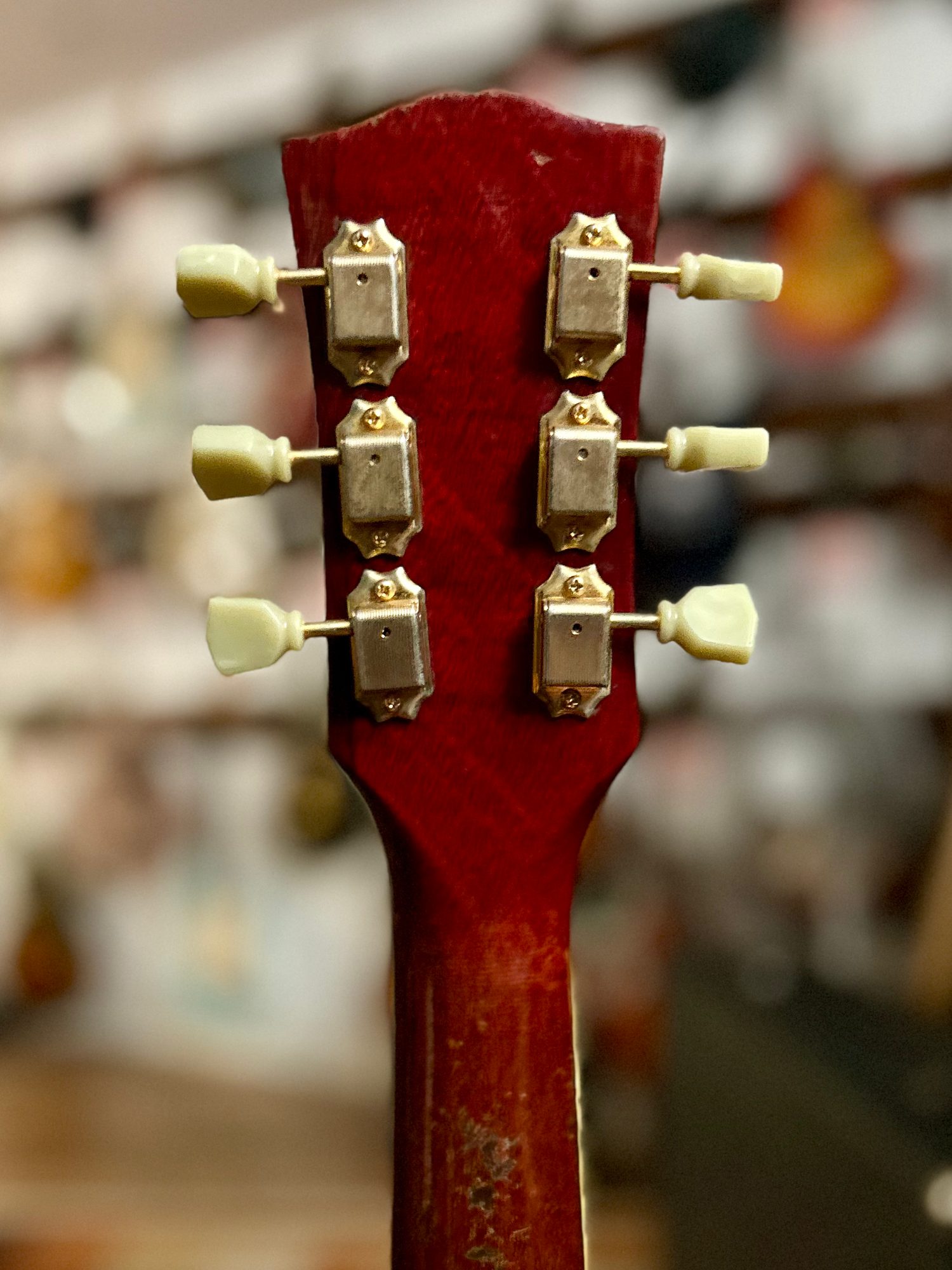
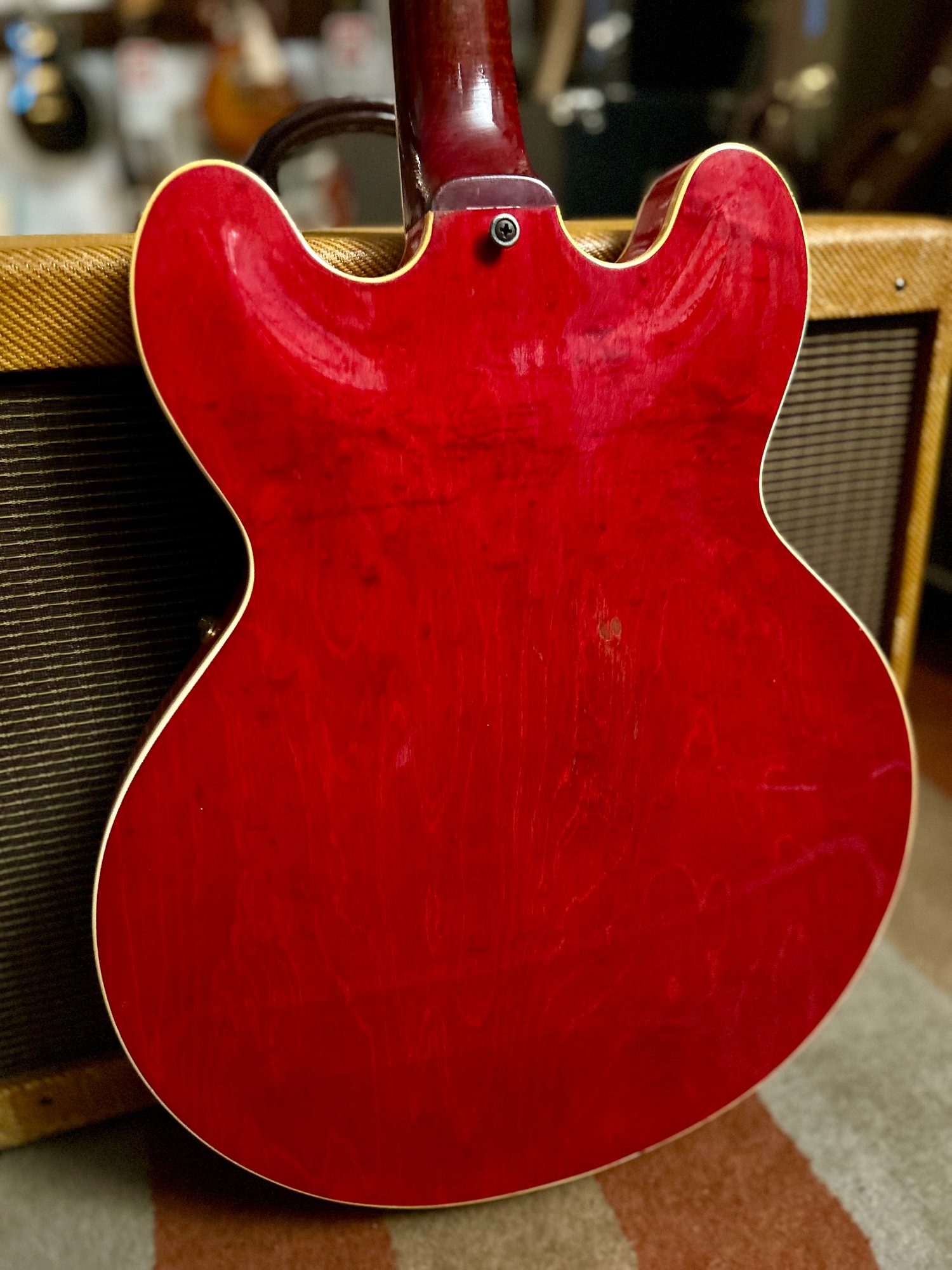
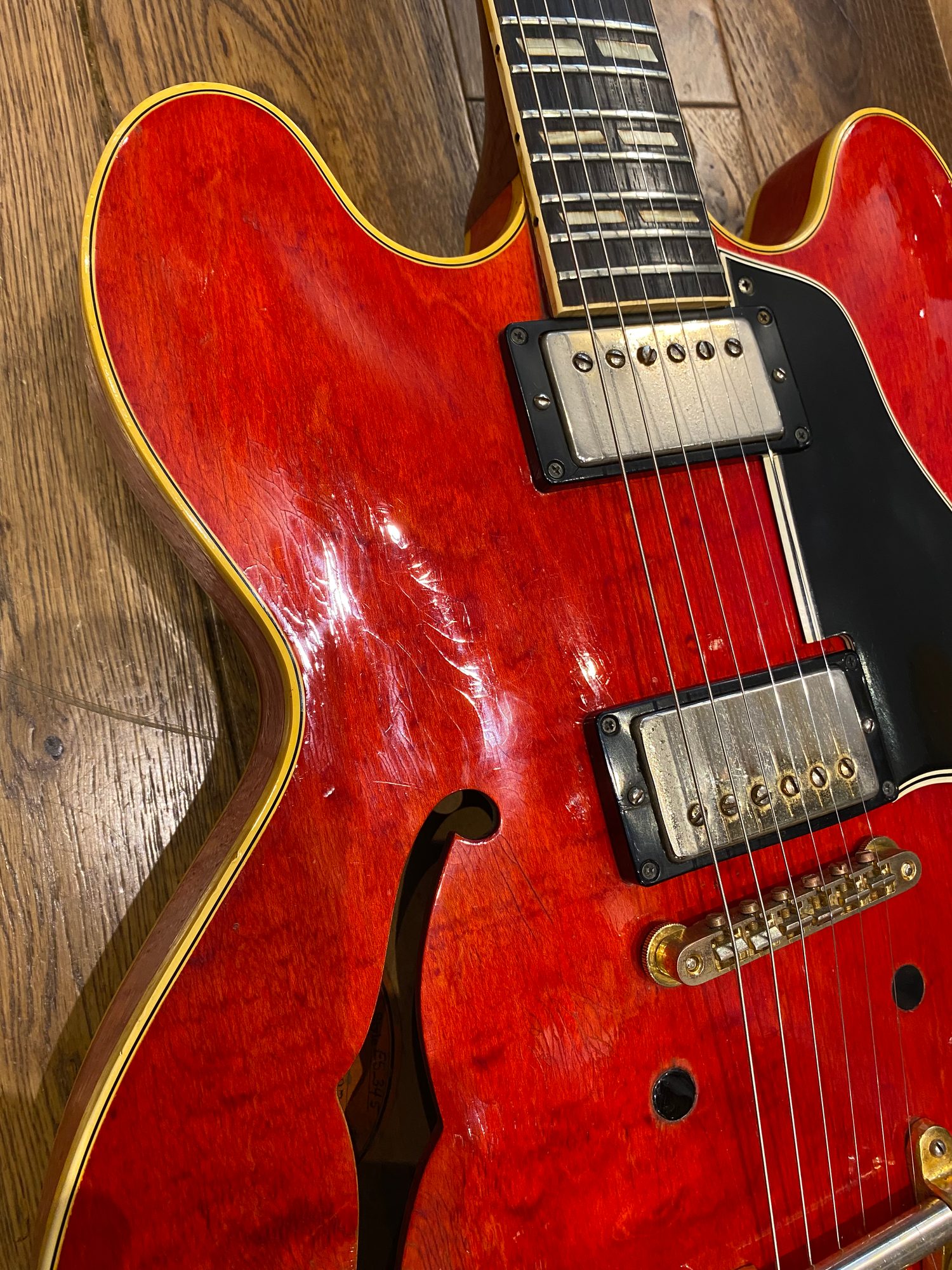
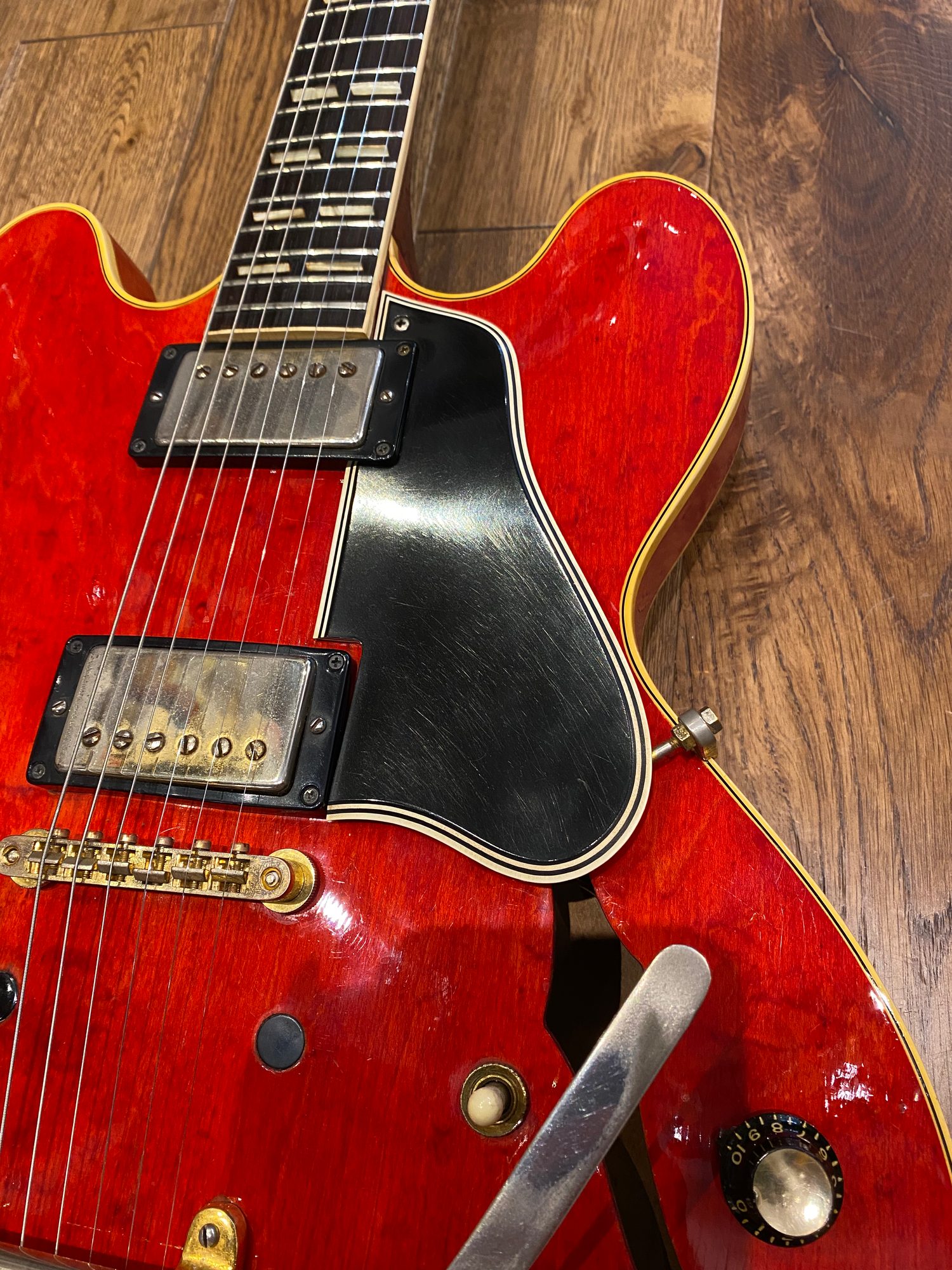
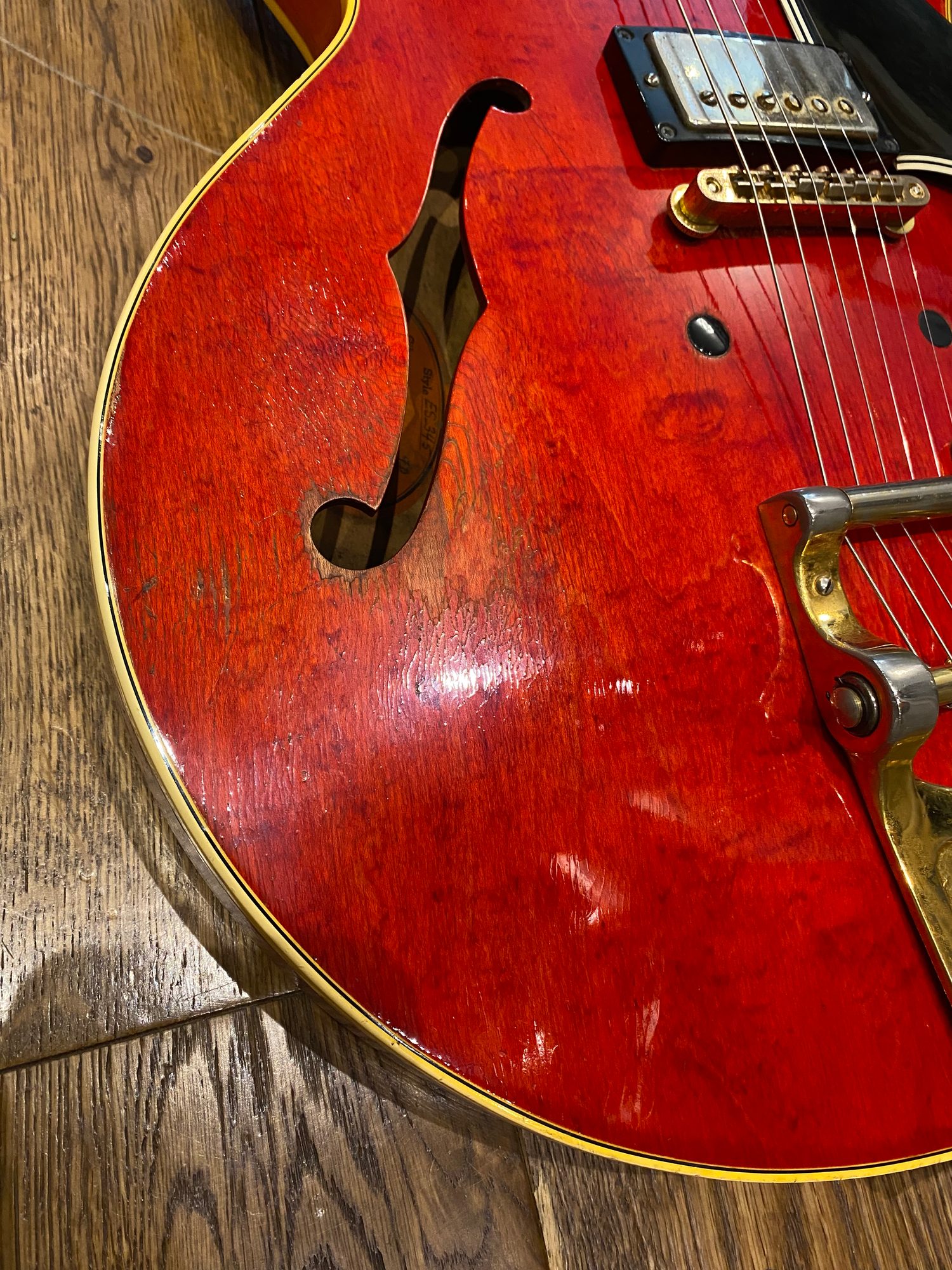
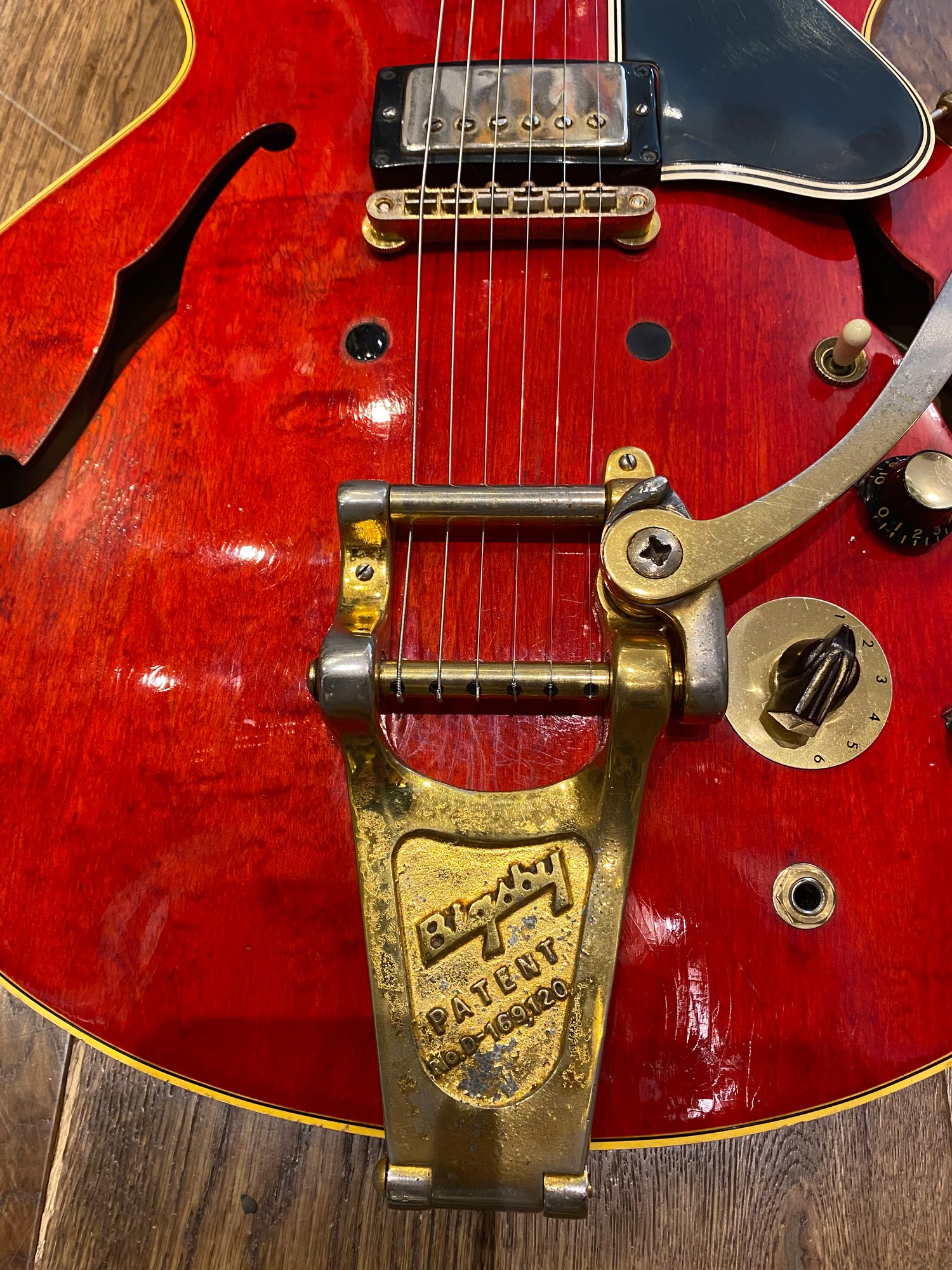
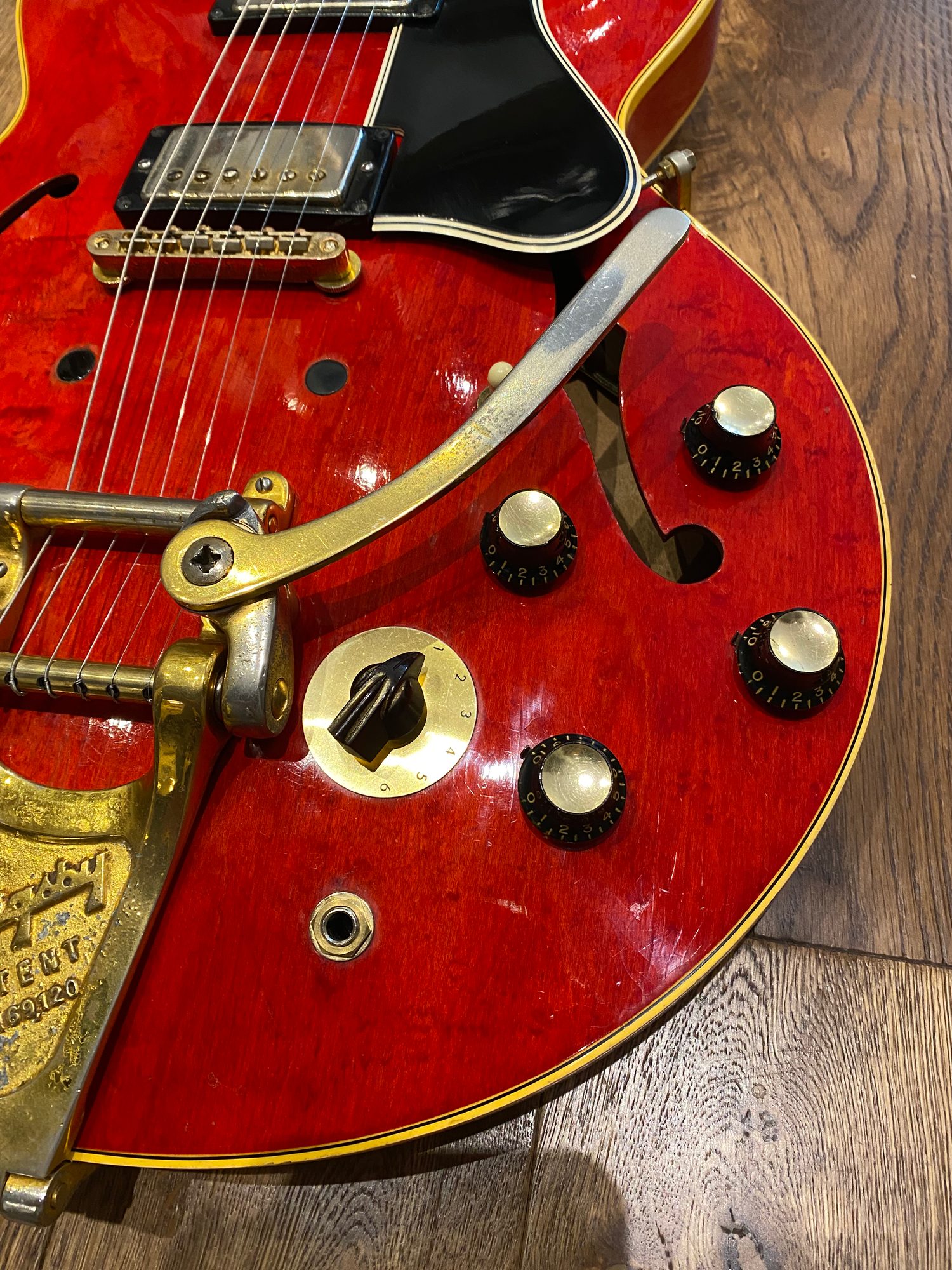
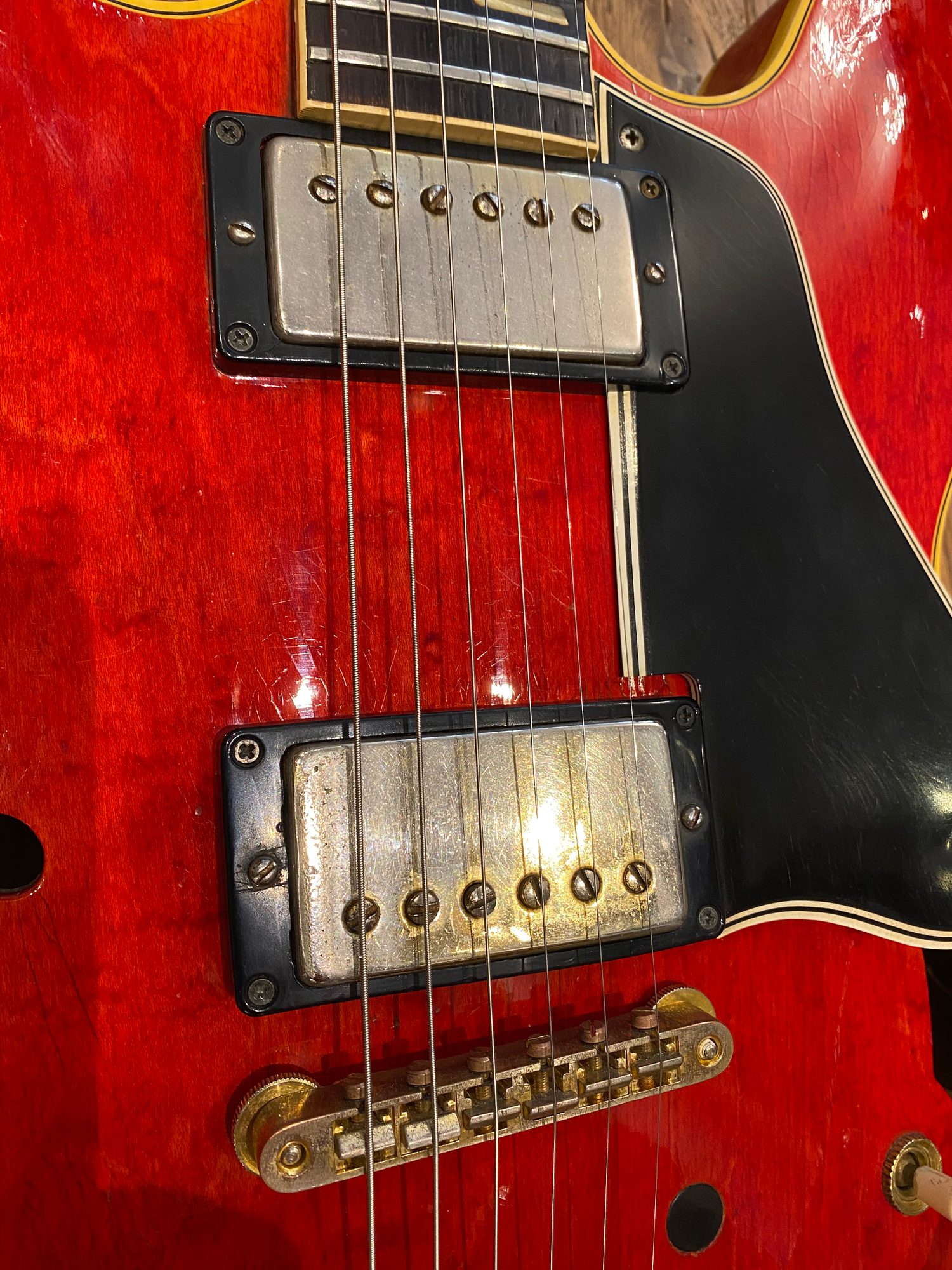
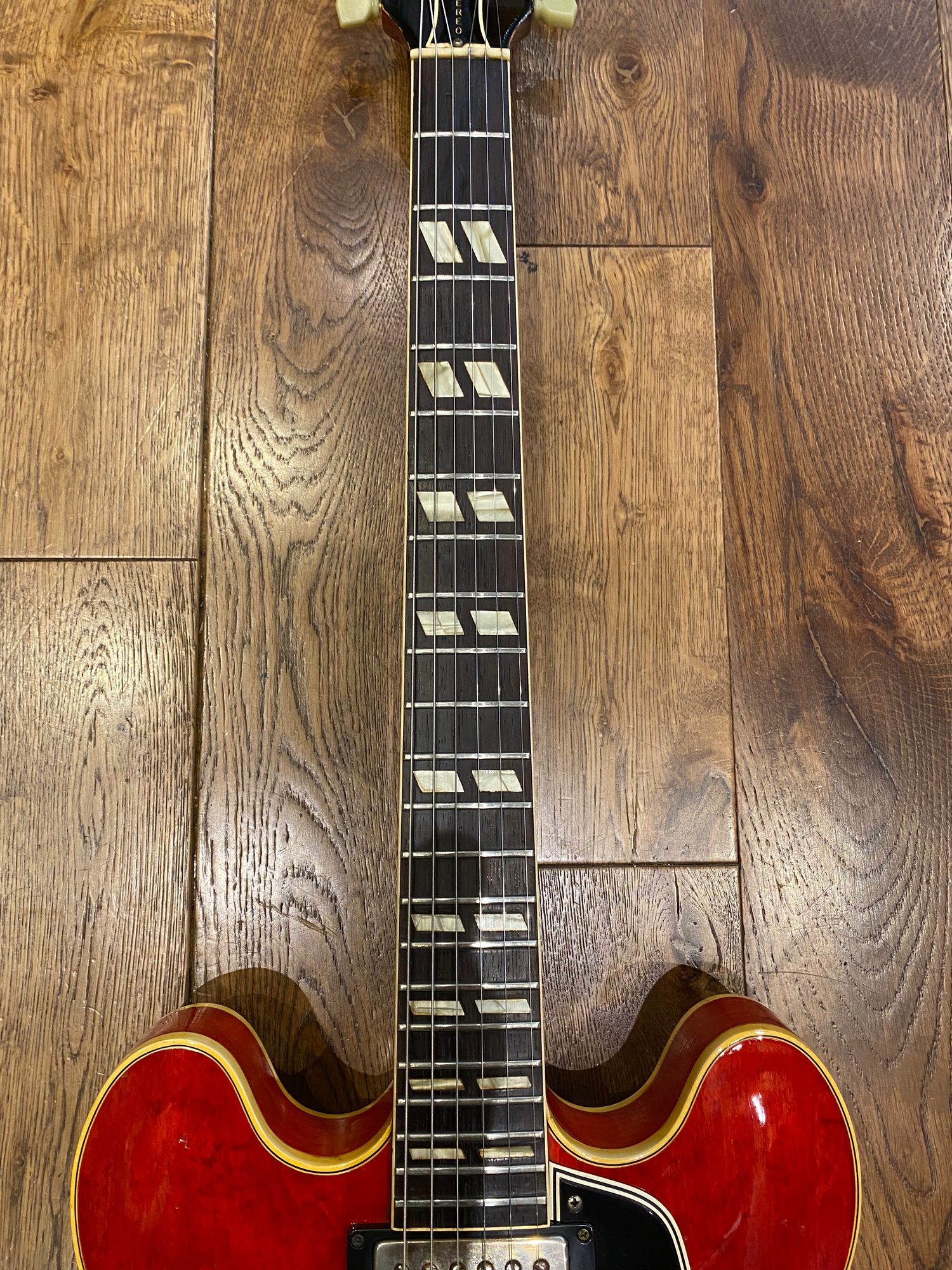
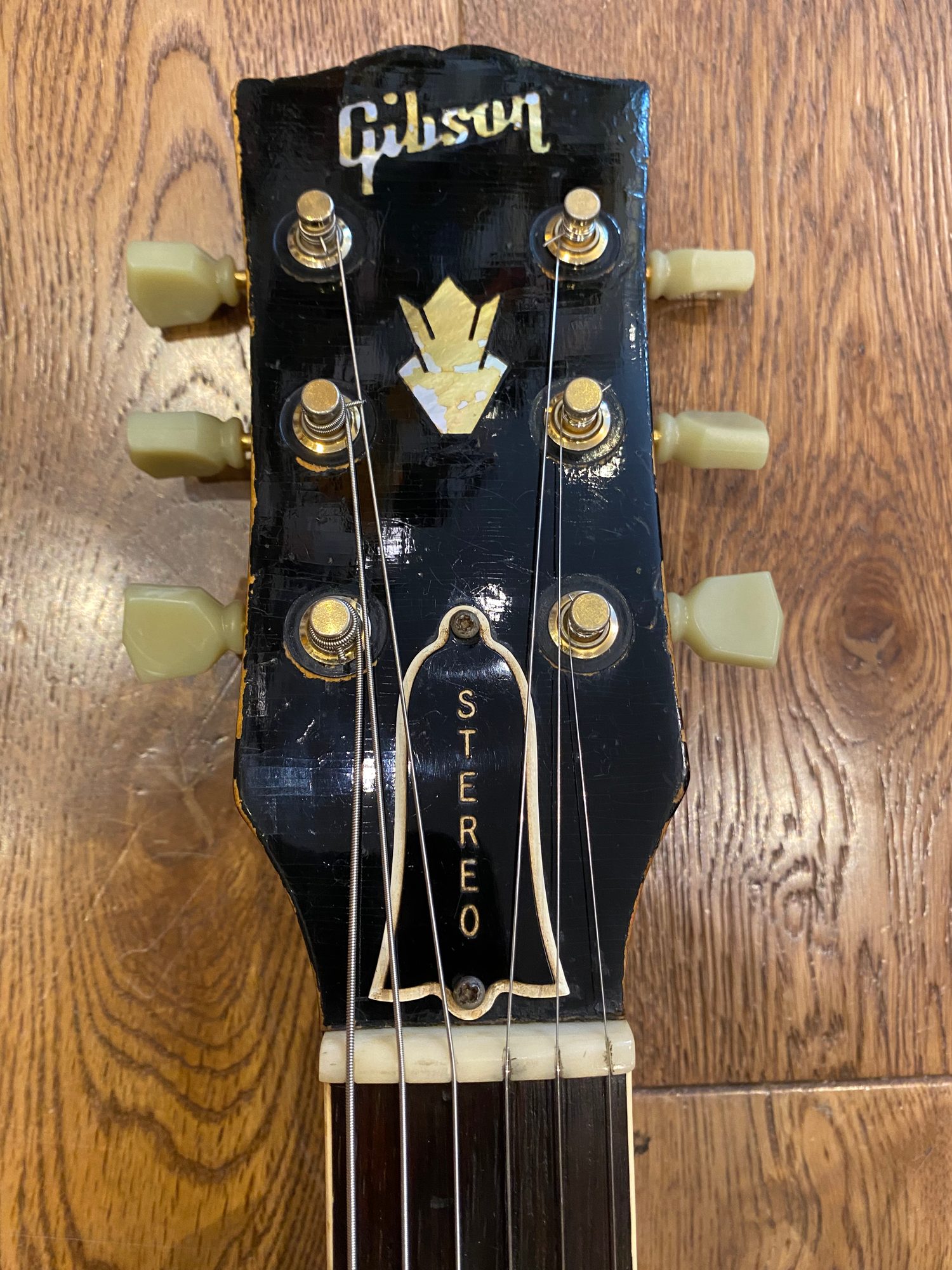
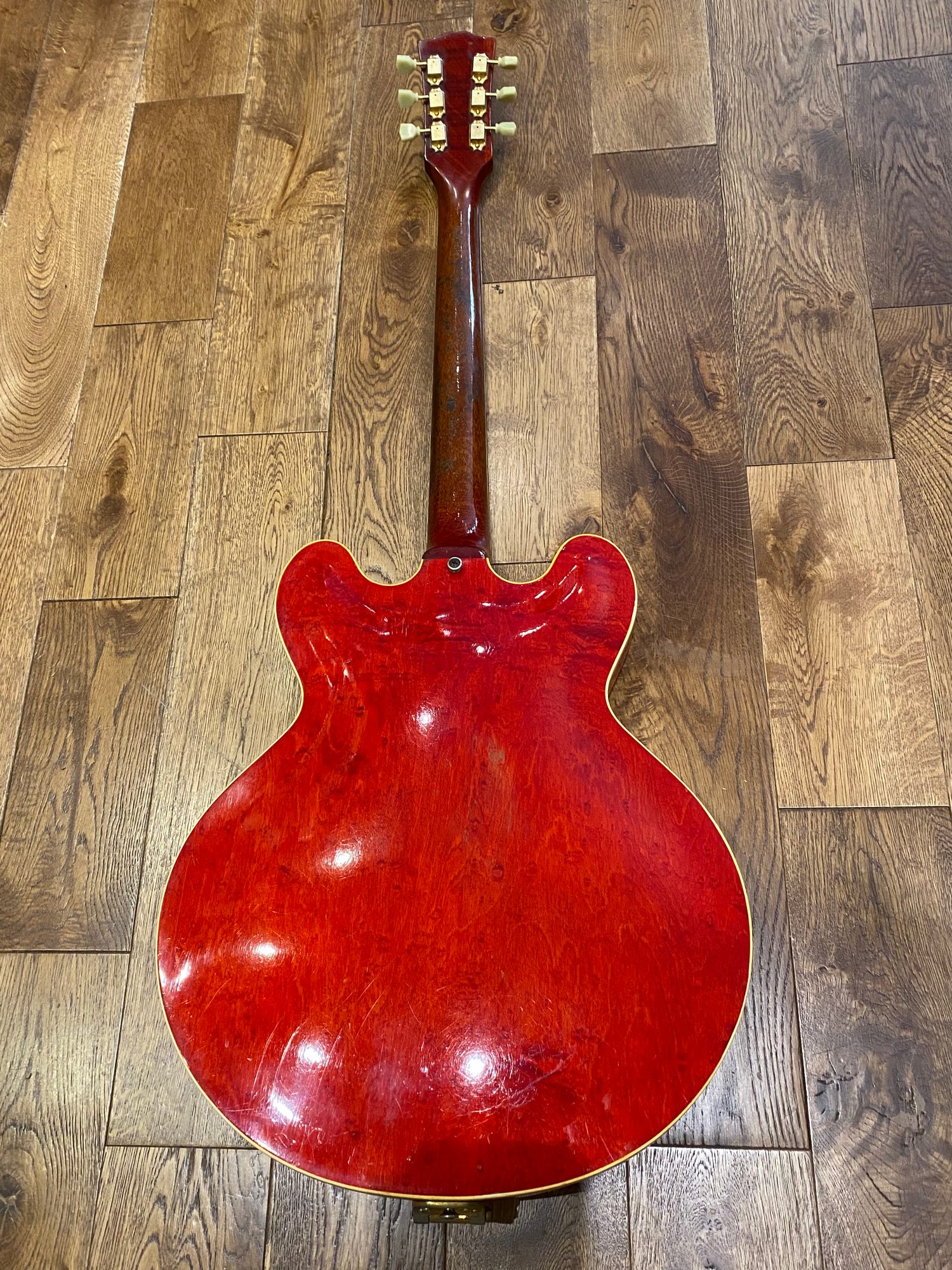
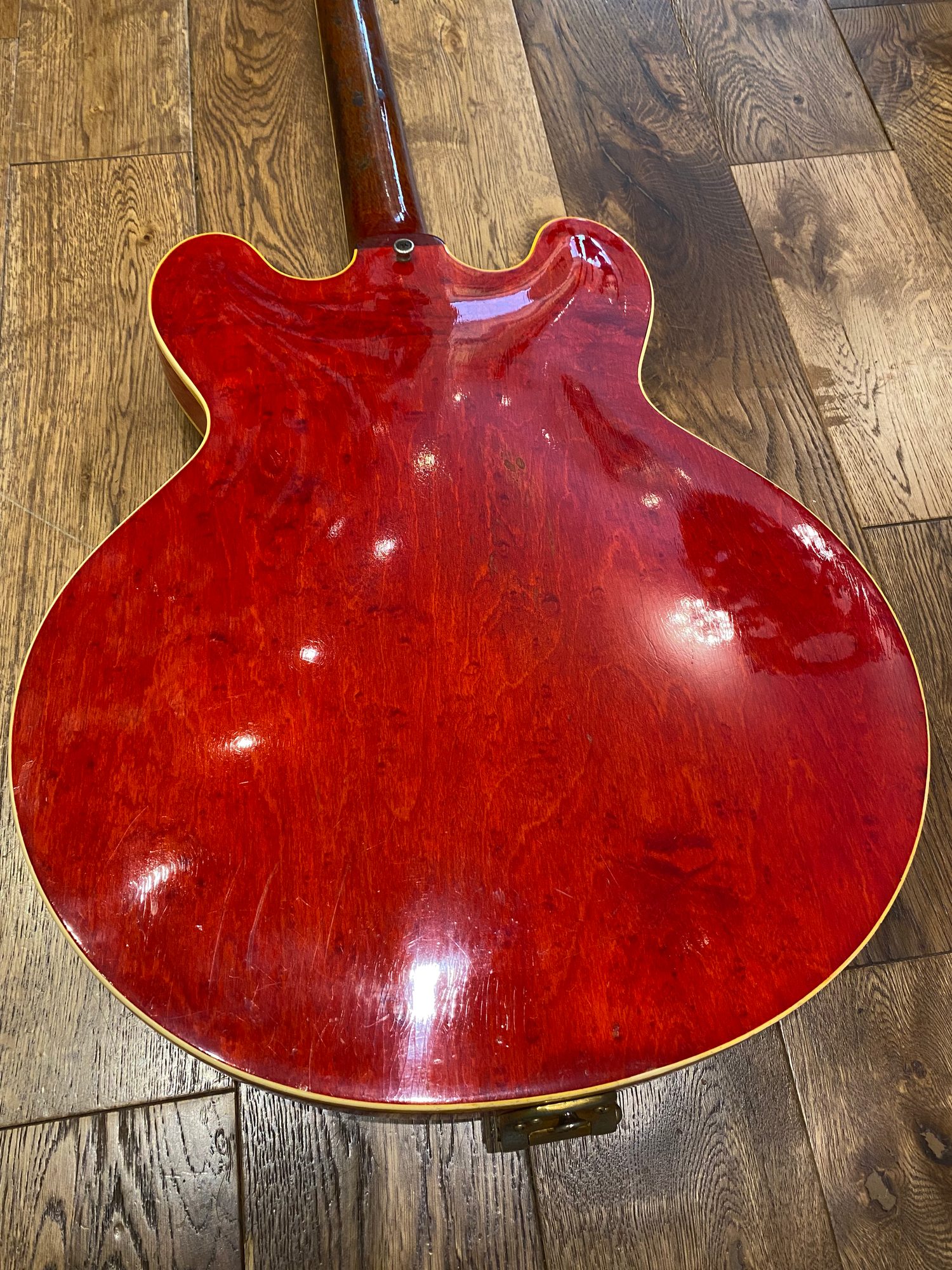
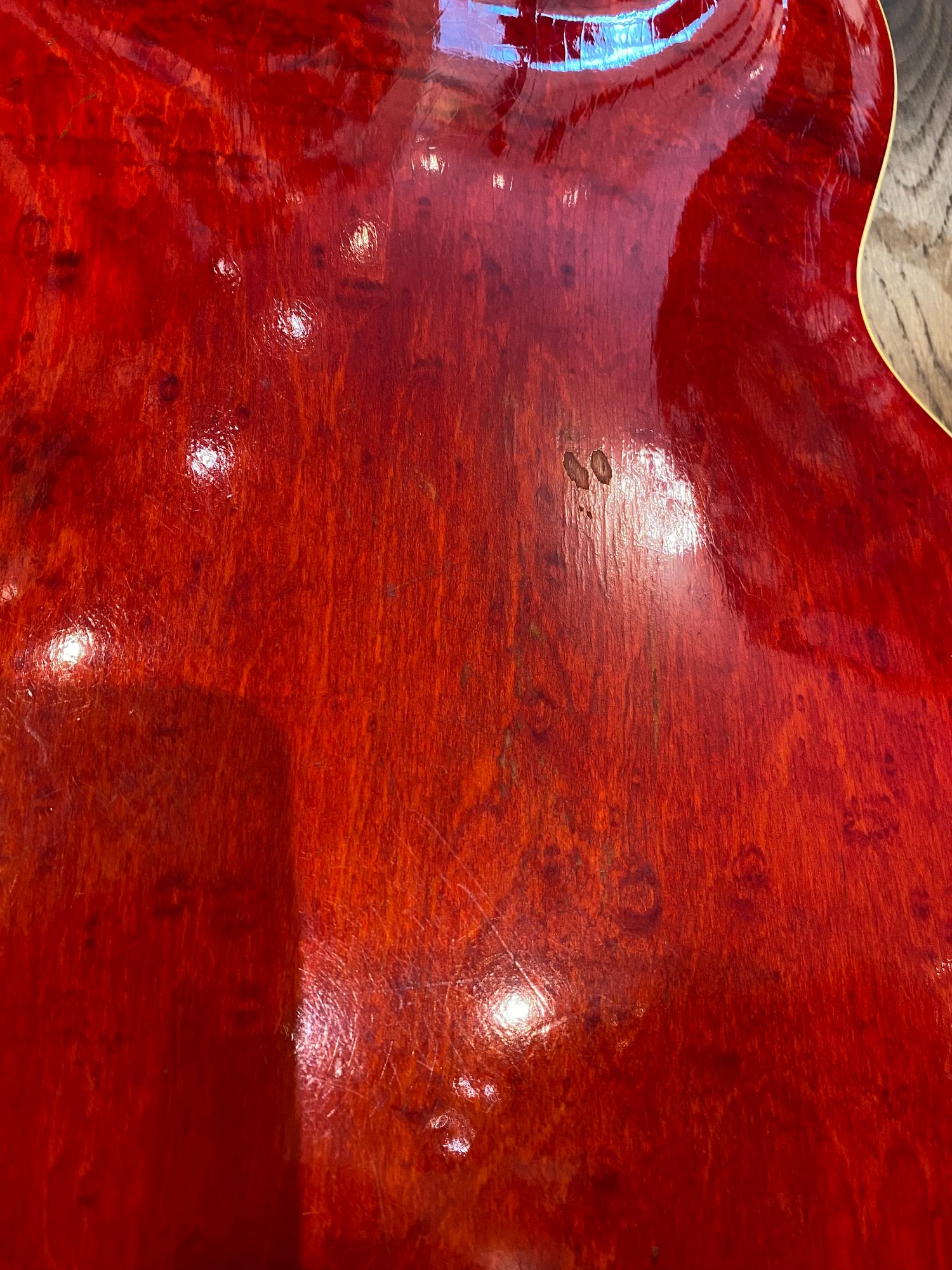
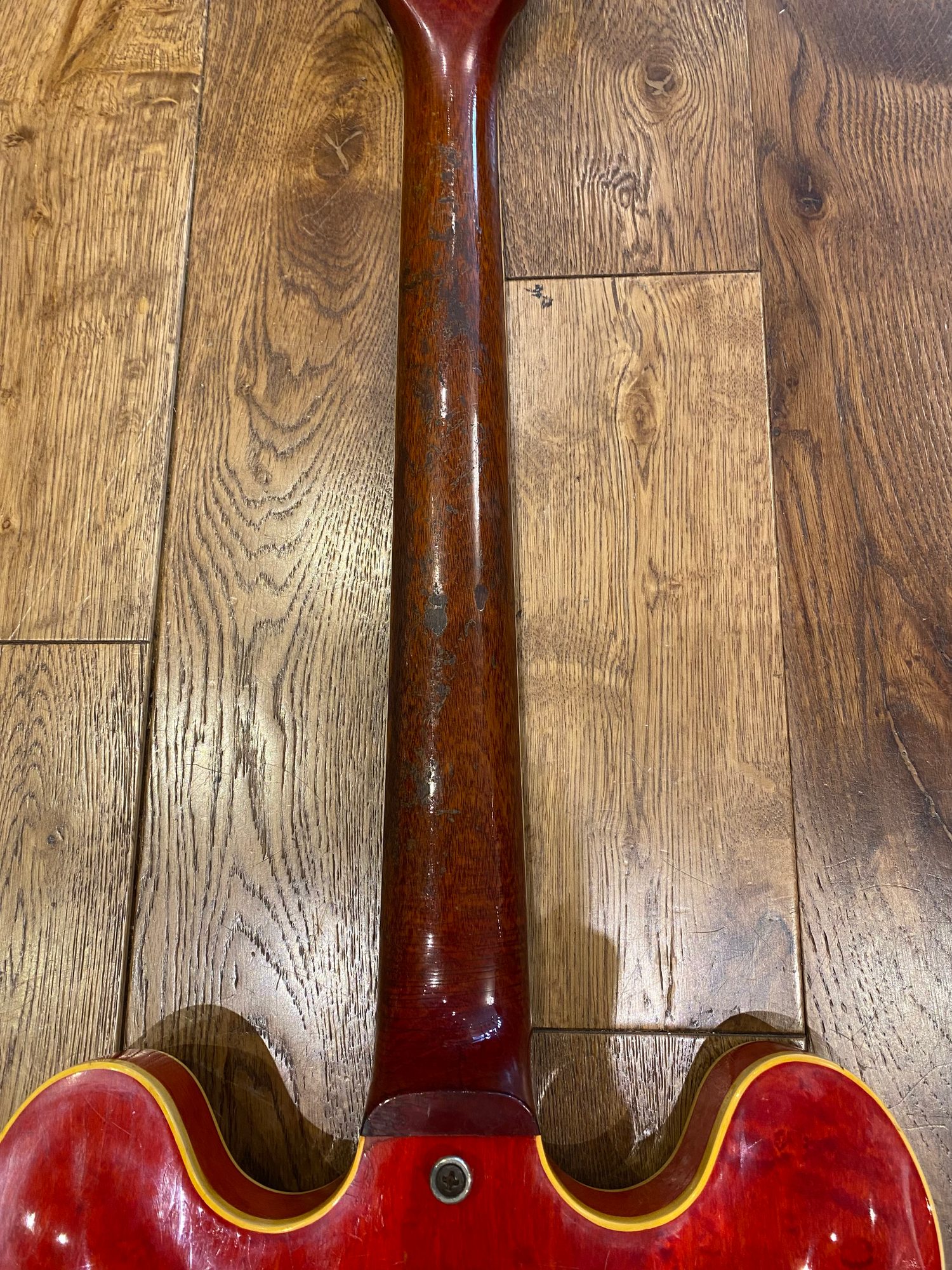
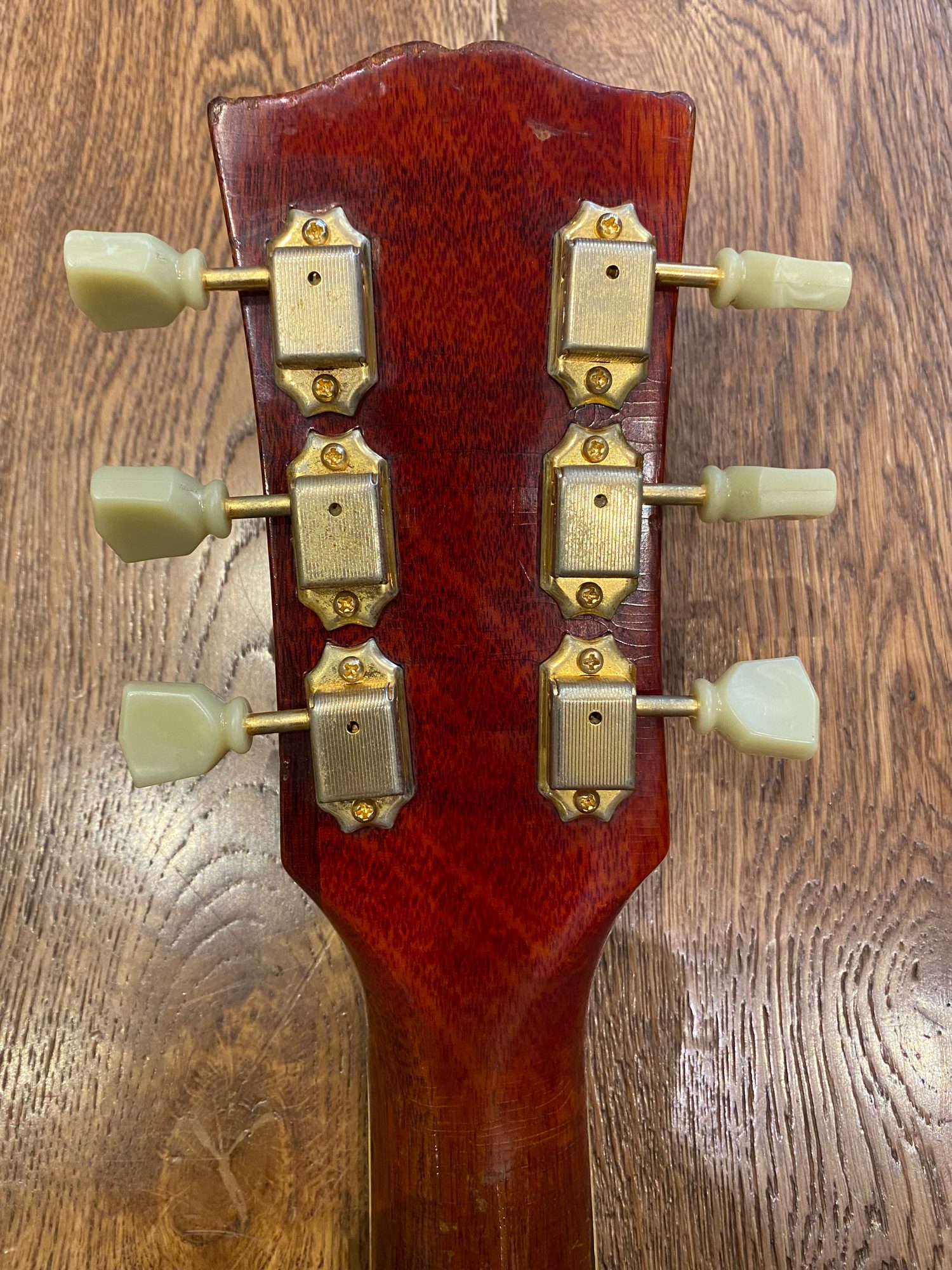
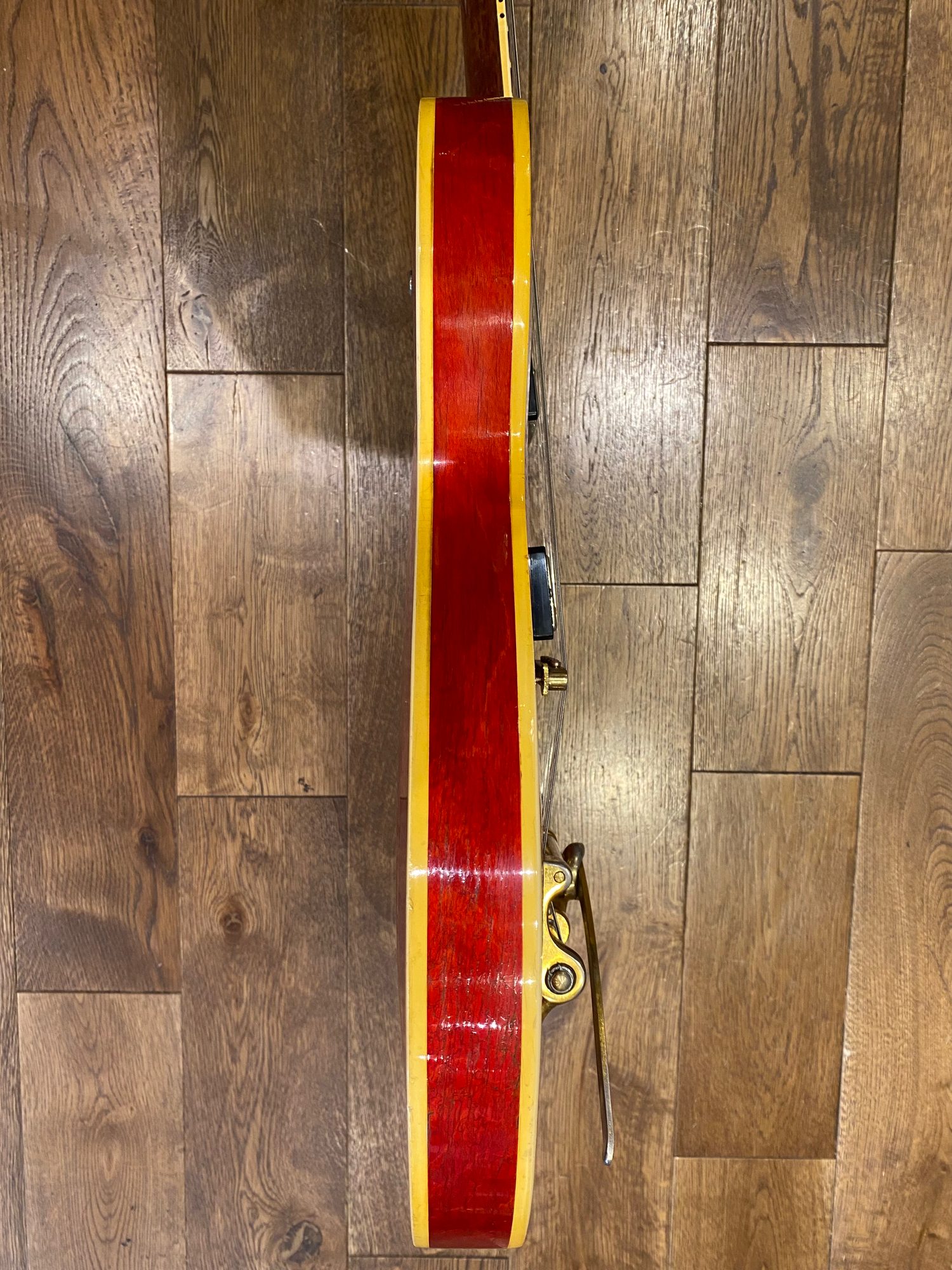
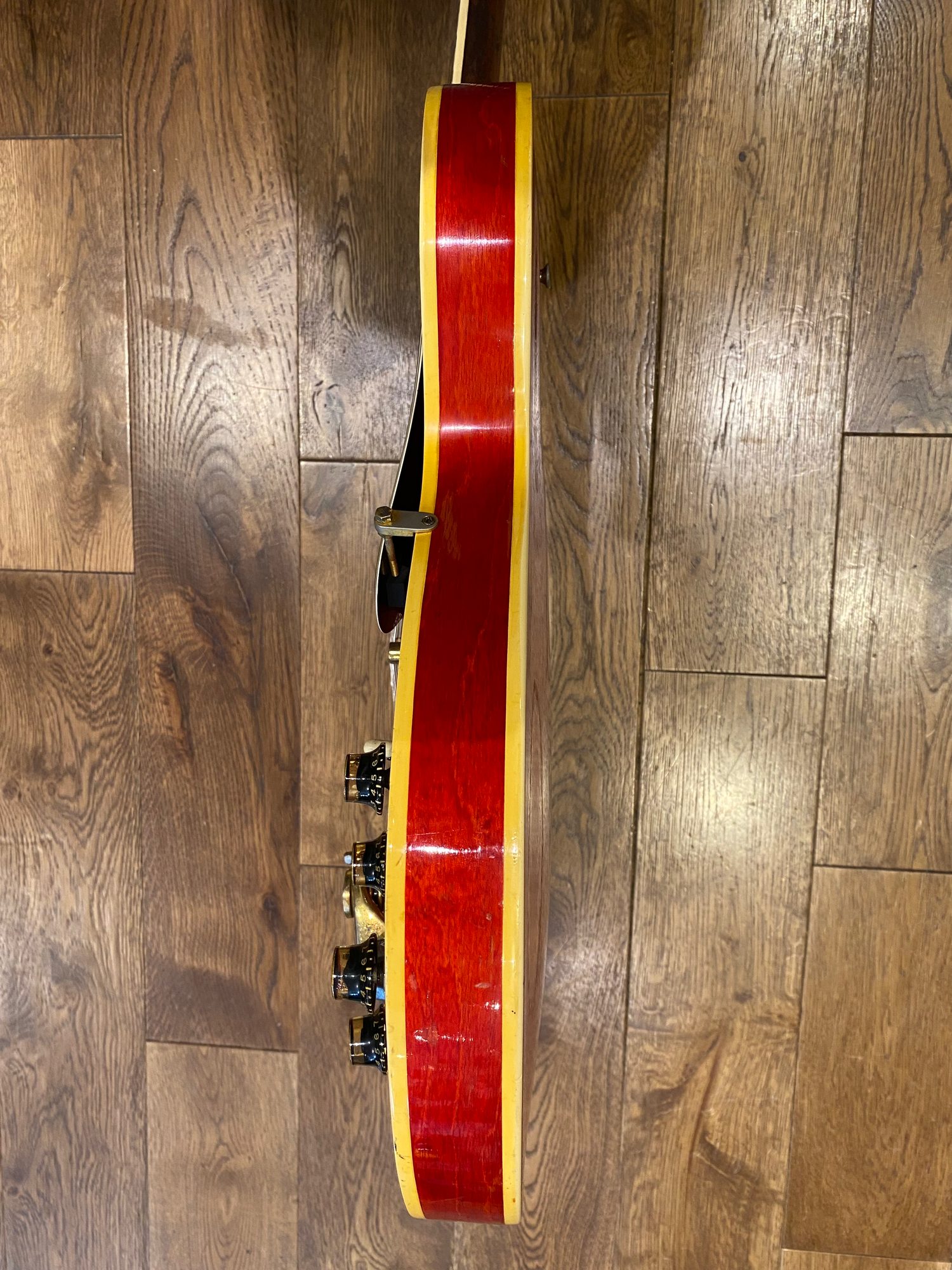
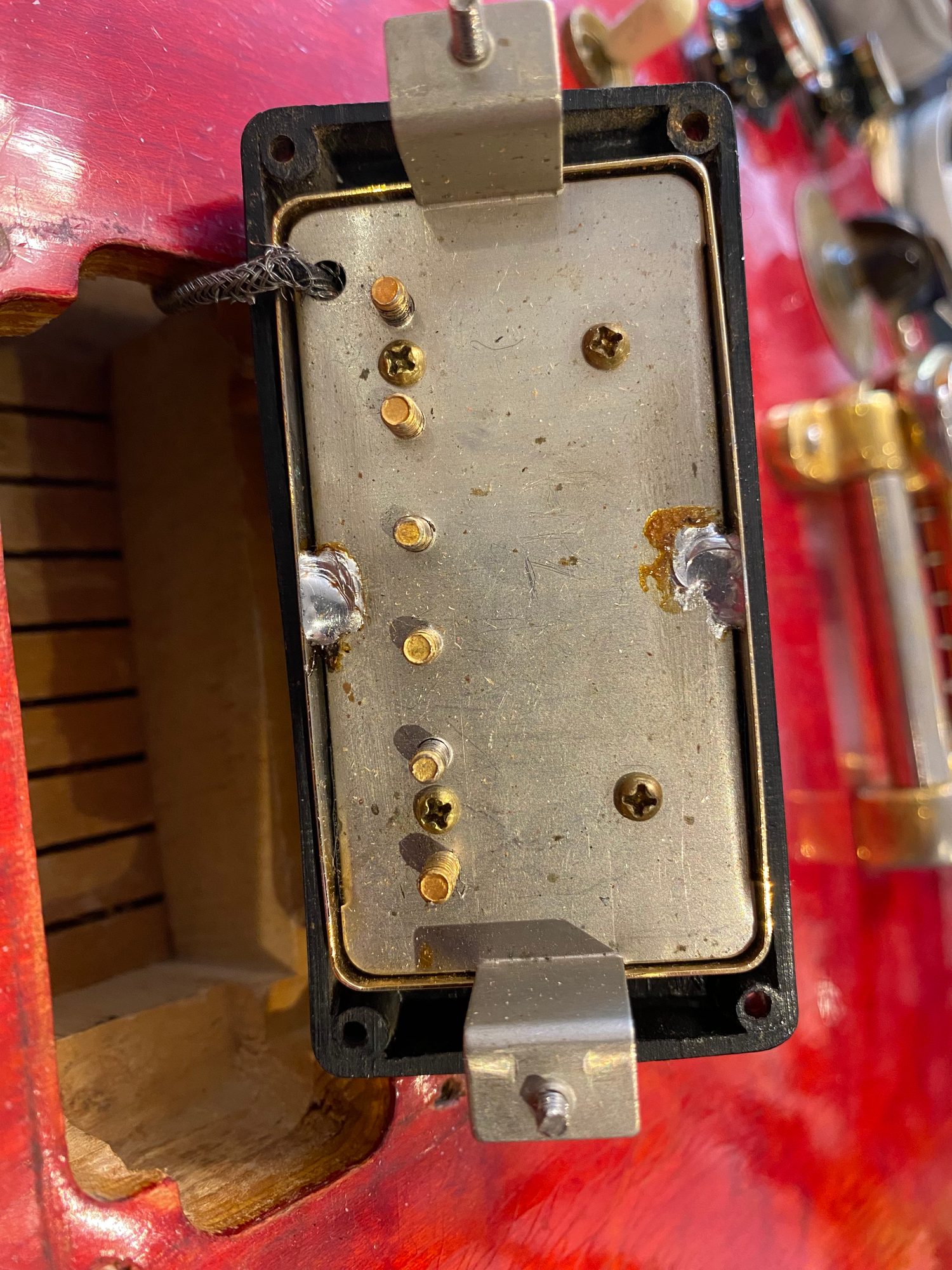
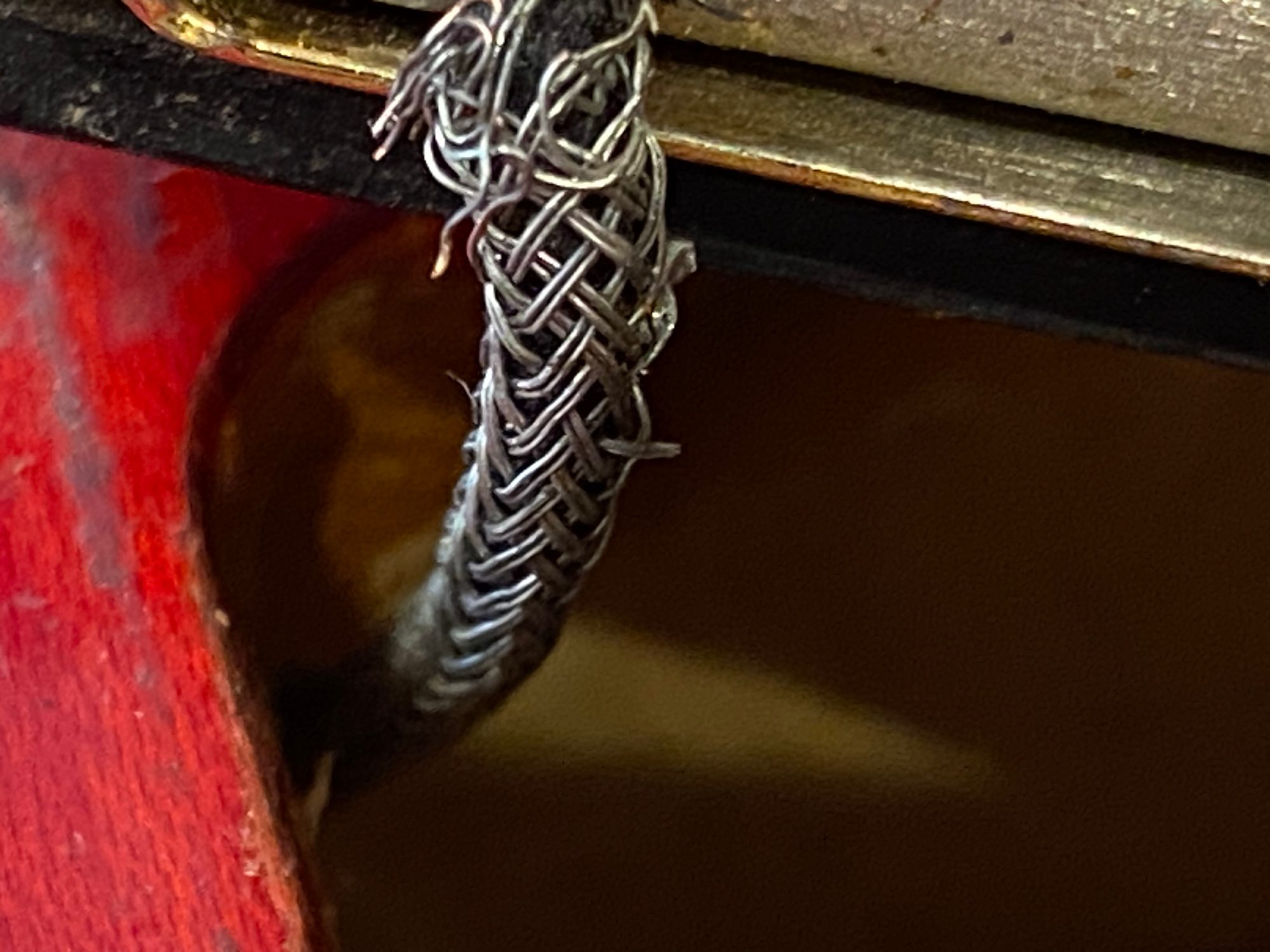
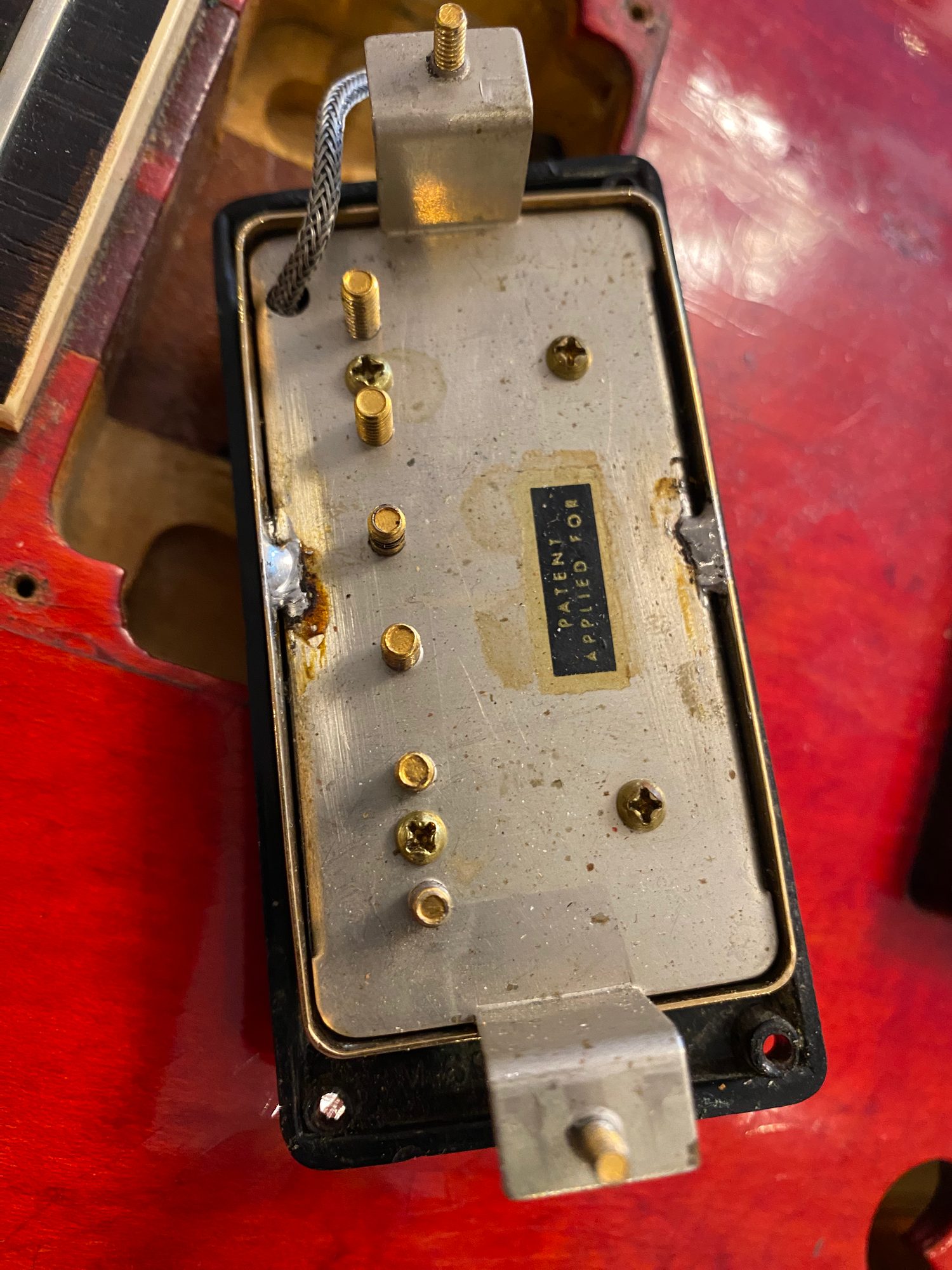
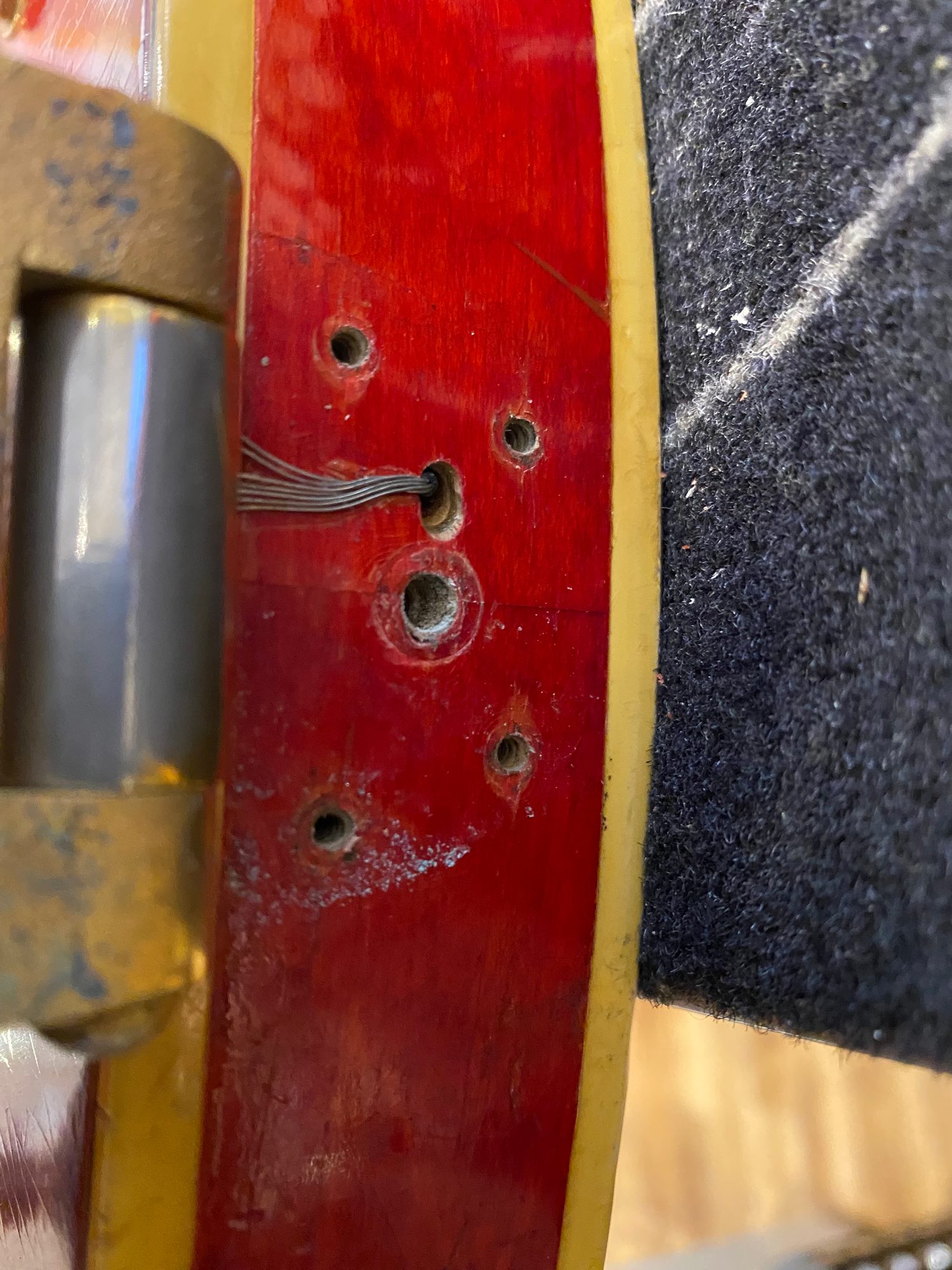
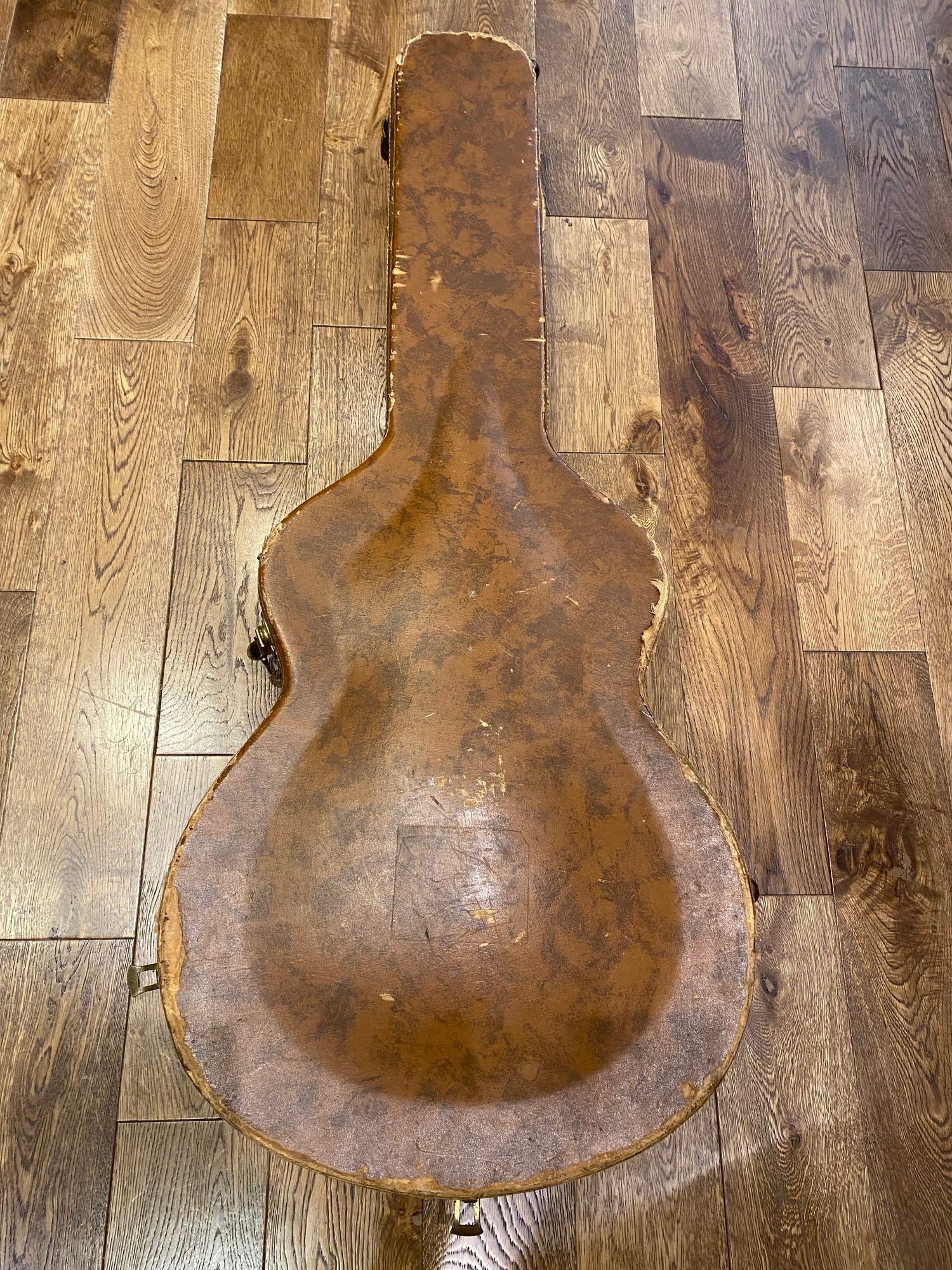
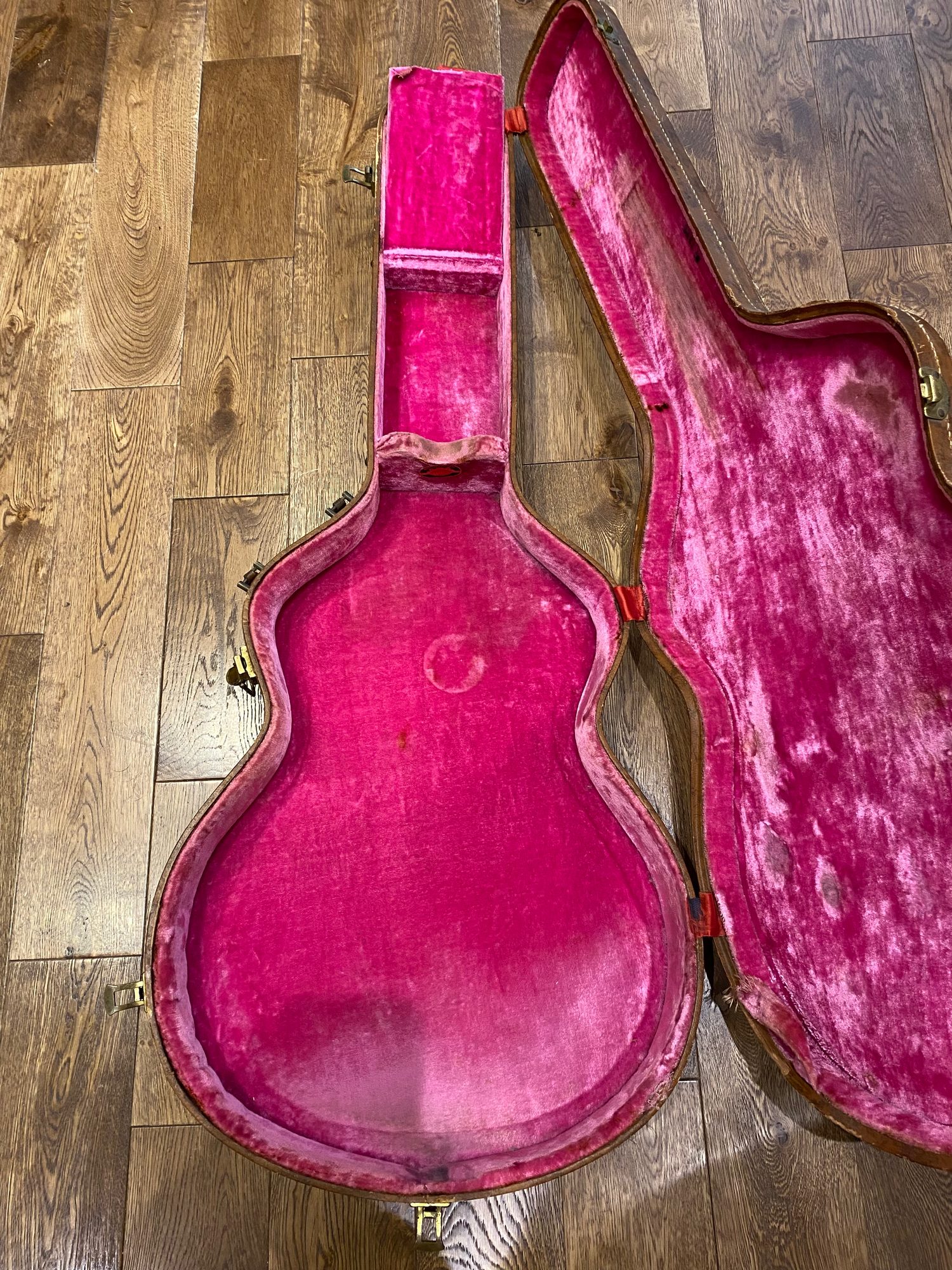
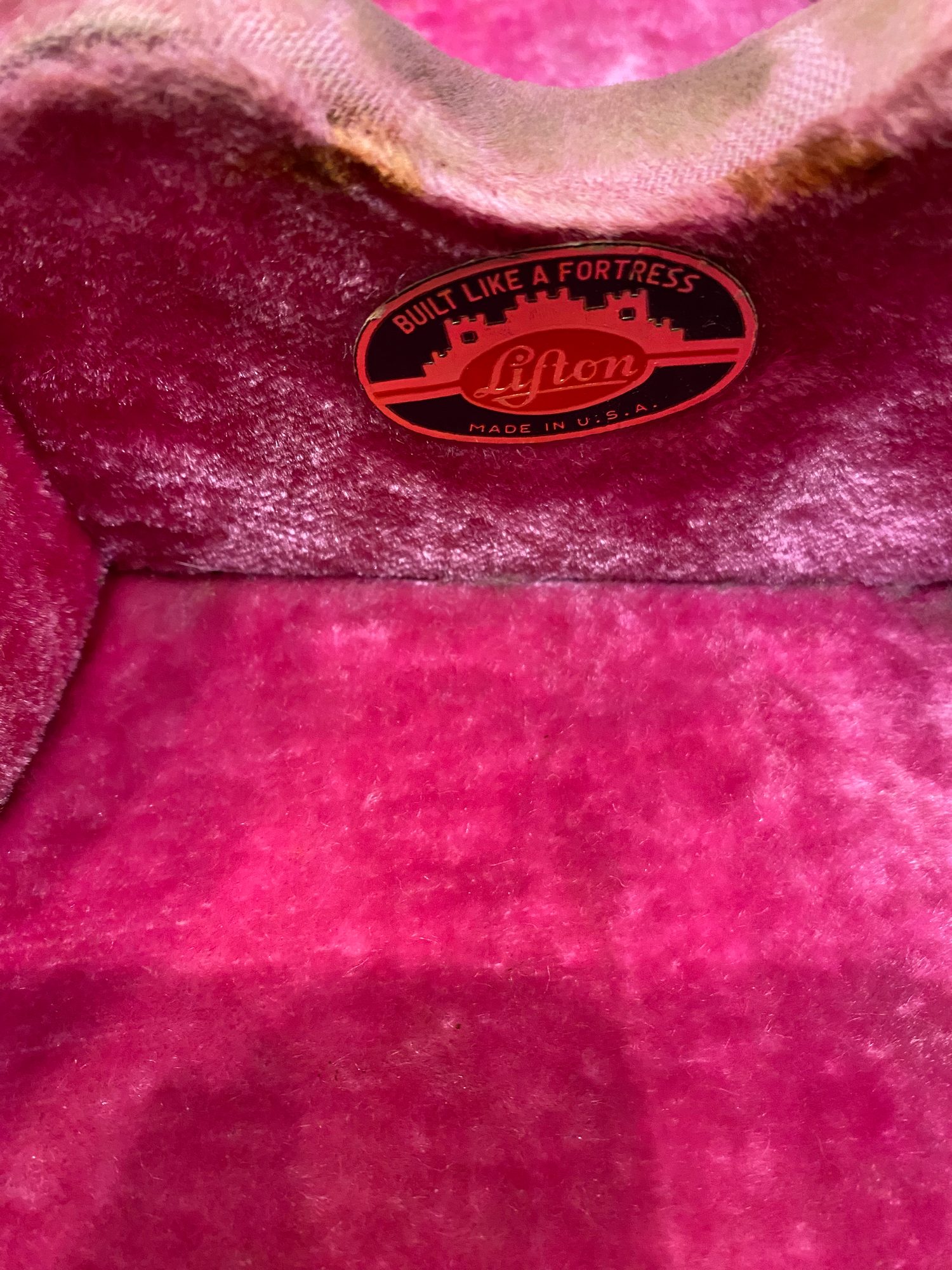
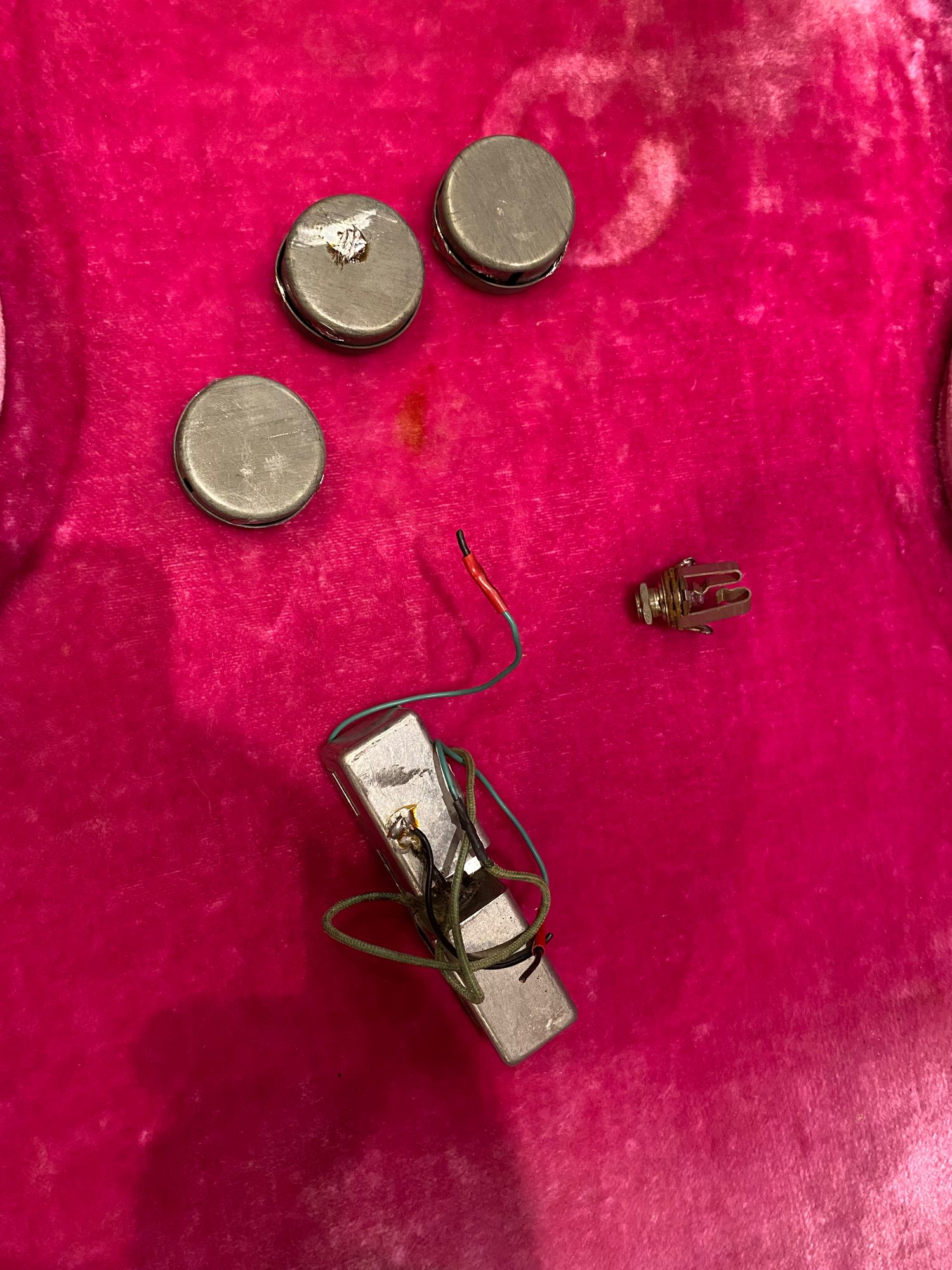
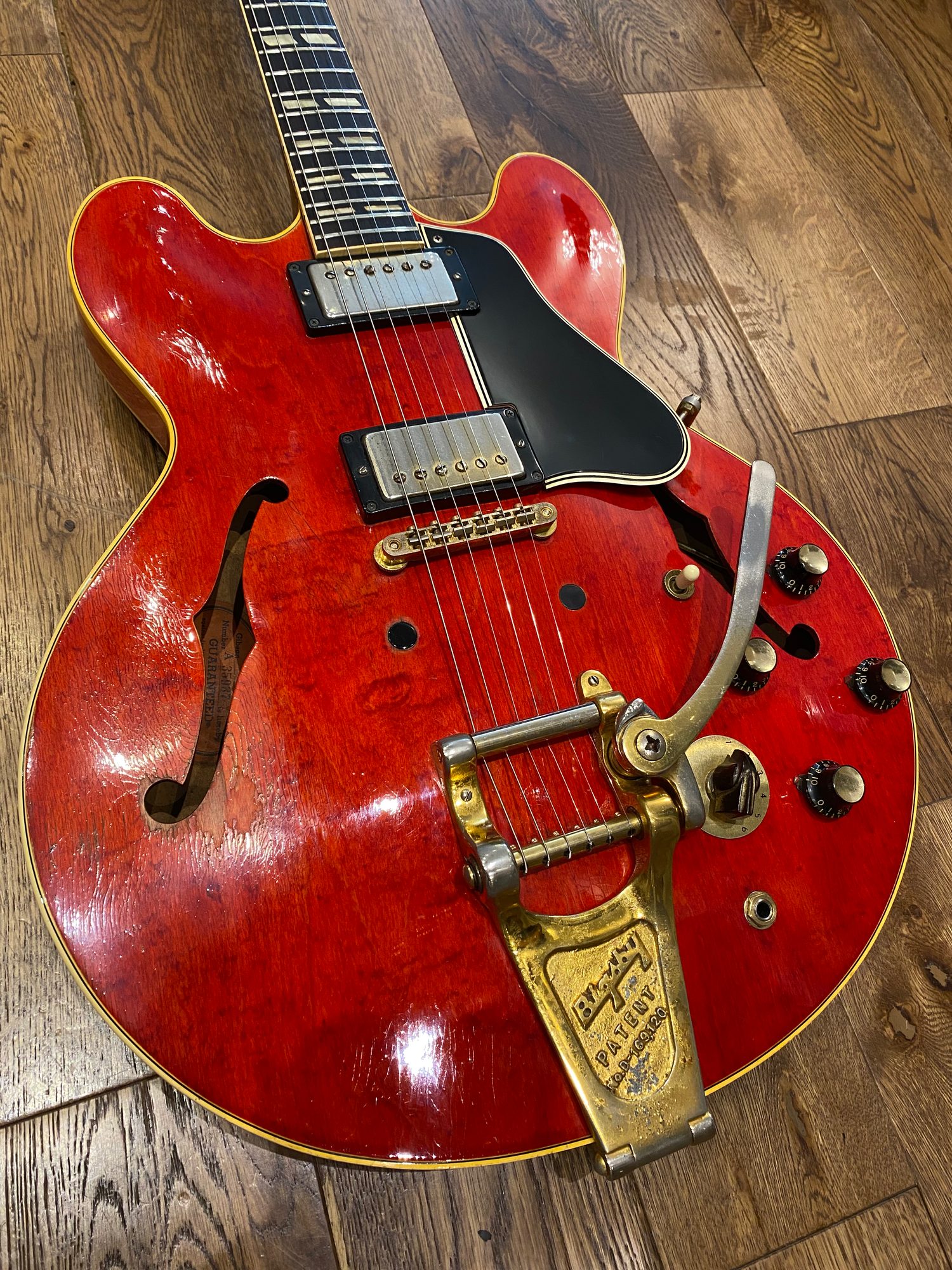
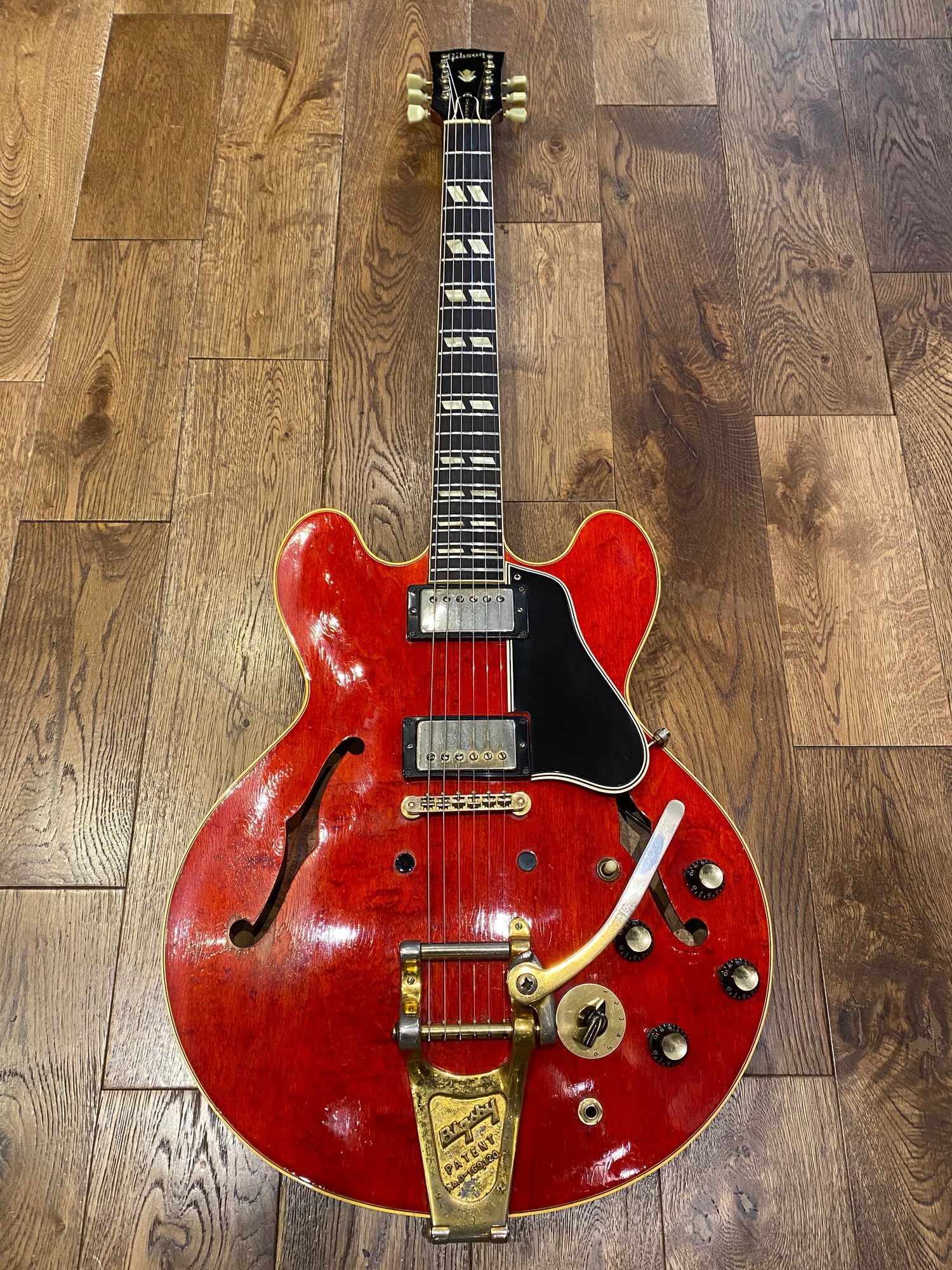
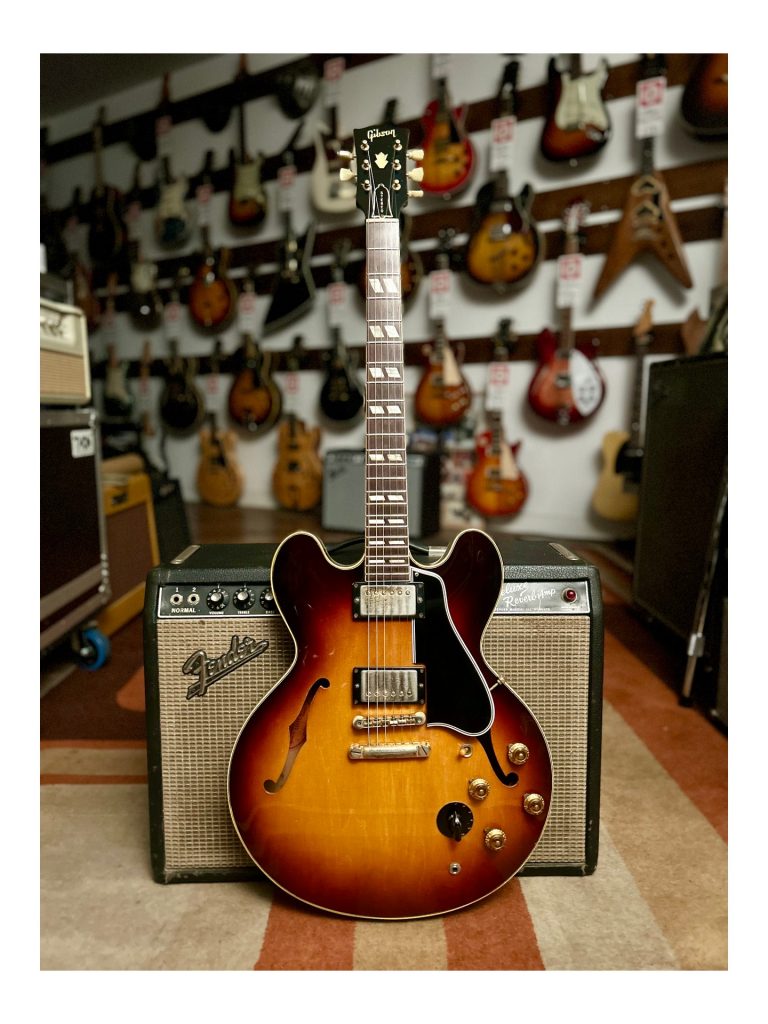
Une Gibson ES-345TD Cherry de 1960, n° A-35937, construite en 1960 et expédiée en janvier 1961. Elle appartient au dernier lot de 345 de l’année et conserve les spécifications 1960 : manche de l’époque, pas d’incrustation à la première frette, PAF à aimant long et pickguard court d’usine. C’est un modèle Bigsby d’origine, dont les « stopbar studs » sont masquées par des pastilles de plastique noir. Le vernis Cherry est d’origine, avec une usure de jeu bien visible et sans casse. Les quatre potentiomètres Centralab 500K d’origine datent des 27e et 28e semaines de 1960 (codes 1346027 et 1346028). Les deux PAF à aimant « long magnets » sont d’origine : 8,37K au manche, encore pourvu de son décalque Patent Applied For, et 7,42K au chevalet, sans décalque comme souvent sur les modèles stéréo de cette période. L’aimant du micro chevalet a été retourné pour les remettre en phase, comme sur une 335. Le jack stéréo a été retiré et le Varitone, réinstallé, est déconnecté : la guitare est câblée en mono, les pièces d’origine restant dans l’étui si l’on souhaite revenir au stéréo. Les autres changements sont un chevalet ABR-1 Faber vieilli, des mécaniques de type Kluson (les trous ont été agrandis lors d’un passage par des Grover), une pastille de stopbar et une vis de contour du micro chevalet. Les frettes d’origine sont usées, avec un buzz minime. Poids 3,55 kg, sillet 42,30 mm, épaisseur de manche 21 mm à la 1re frette et 22 mm à la 12e. Livrée dans son étui rigide d’origine Lifton « Built Like a Fortress ».
1960 GIBSON ES-345TD Bigsby Cherry
A 1960 Gibson ES-345TD in Cherry, serial A-35937, built in 1960 and shipped in January 1961. It comes from the last batch of 345s made that year and retains 1960 specifications: period neck shape, no first-fret inlay, long-magnet PAFs and an early factory short pickguard. This is an original factory Bigsby guitar, with the stopbar studs covered by black plastic dots. The Cherry finish is original, with clearly visible player wear and no breaks. All four original 500K Centralab pots date to the 27th and 28th weeks of 1960 (codes 1346027 and 1346028). Both long-magnet PAF pickups with A2 magnets are original: the neck, still wearing its Patent Applied For decal, reads 8.37K; the bridge, which never had a PAF decal as was common on stereo models of this period, reads 7.42K. The bridge pickup magnet was flipped so the pickups sit in phase, as on a 335. The stereo jack was removed and the Varitone, though reinstalled, is disconnected: the guitar is wired as a mono 335, with the original parts kept in the case should one want to return it to stereo. Other replacements include an aged Faber ABR-1 bridge, Kluson-type tuners (the post holes were enlarged during an earlier Grover install), one stopbar stud cover and one screw on the bridge pickup ring. The original frets are worn, with minimal buzzing. Weight 3.55 kg, nut width 42.30 mm, neck depth 21 mm at the 1st fret and 22 mm at the 12th. Comes in its original Lifton “Built Like a Fortress” hardshell case.
| Brand | Gibson |
| Model | ES-345TD |
| Finish | Cherry |
| Made In Year | 1960 (shipped January 1961) |
| Body Material | Maple laminate |
| Neck/Fingerboard | Mahogany/rosewood |
| Tuners | Replacement Kluson-type (post holes enlarged from a prior Grover install) |
| Weight | 3,55 kgs / 7.826lbs |
| Scale Length | 24.75″ |
| Nut Width | 42,30 mm / 1.665″ |
| Neck Depth 1st – 12th | 21,00 mm / .827″ – 22,00 mm / .866″ |
| Radius | 12″ |
| Electronics | Original long-magnet PAFs (A2), original Centralab pots (weeks 27–28 of 1960); Varitone present but disconnected; wired as mono |
| Pickup Impedance | N = 8.37K, B = 7.42K |
| Contains Brazilian Rosewood (Y/N) | Y |
| Case | Original Lifton brown hardshell case |
| Modifications/Repairs | Wired to mono (stereo jack removed, Varitone disconnected; original parts in case); replacement ABR-1 (aged Faber); replacement Kluson-type tuners; one replacement stopbar stud cover; one replacement screw on the bridge pickup ring; bridge PAF magnet flipped in-phase |

Avis
Il n’y a pas encore d’avis.